

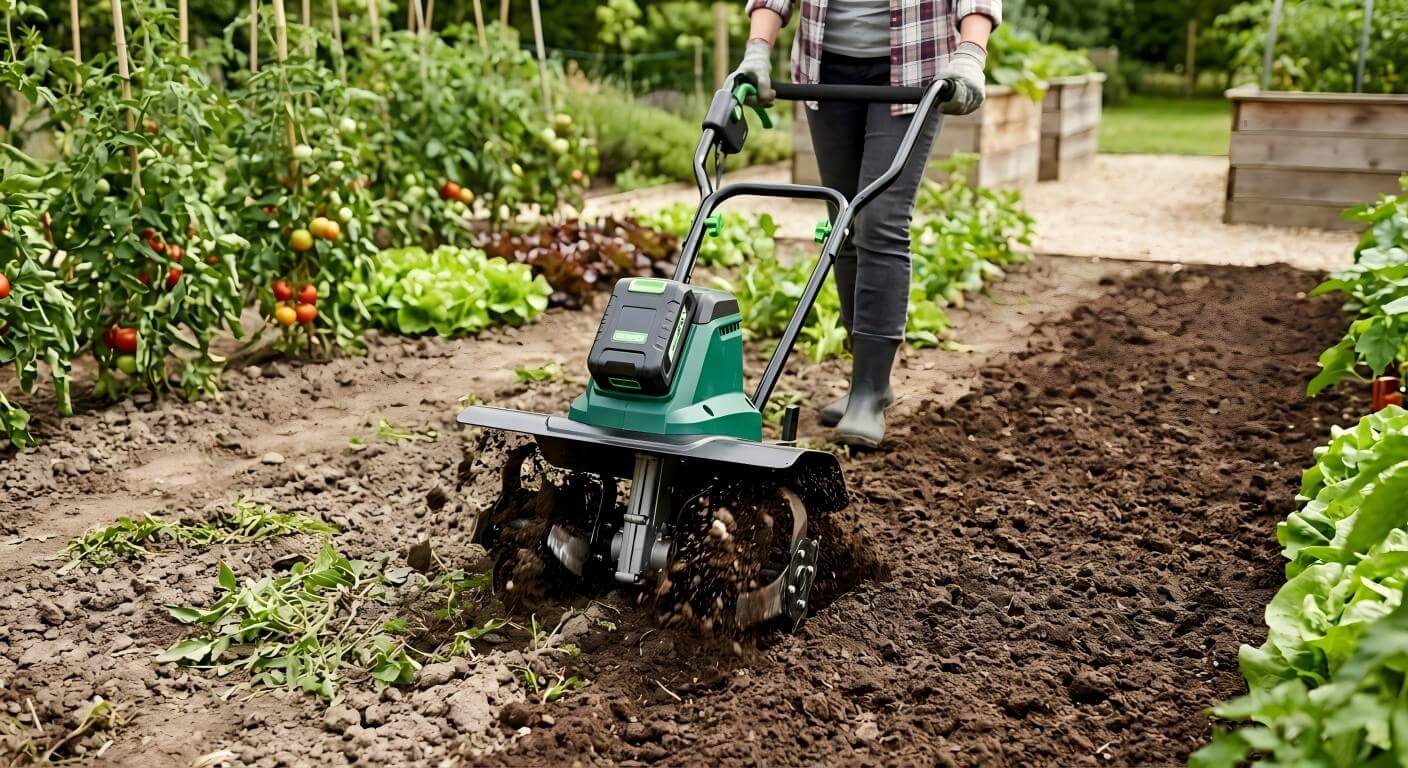
Finding the right cultivator manufacturer is increasingly important for garden equipment distributors, importers, wholesalers, retailers, Amazon sellers, landscaping suppliers, and private-label brands.
The global cultivator and tiller industry includes everything from compact hand-held cultivators and cordless garden cultivators to gasoline-powered mini tillers, walk-behind cultivators, rotary tillers, and tractor-mounted agricultural cultivators.
In 2026, buyers are no longer evaluating manufacturers only by product price. They are also looking at manufacturing capability, product reliability, battery technology, OEM and ODM flexibility, certifications, packaging, minimum order quantities, spare parts, delivery capability, and after-sales support.
This guide reviews 10 leading cultivator manufacturers and suppliers based on their product range, manufacturing capabilities, market presence, technology, OEM potential, and suitability for international B2B buyers.
Editor's Note: This is an editorial ranking for international sourcing and procurement. It is not a claim that these companies represent the top 10 manufacturers by global sales revenue.
Quick Comparison: Top 10 Cultivator Manufacturers in 2026
| Rank | Manufacturer | Country/Region | Main Cultivator Types | OEM/ODM | Best For |
|---|---|---|---|---|---|
| 1 | Hantechn | China | Cordless, Electric, Garden Cultivators, Mini Tillers | Yes | OEM & Private Label |
| 2 | Honda Power Equipment | Japan / USA | Mini, Mid-Tine, Rear-Tine Tillers | No/Brand-focused | Premium Market |
| 3 | Husqvarna Group | Sweden | Garden Tillers, Cultivators, Attachments | No/Brand-focused | Professional & Residential |
| 4 | STIHL | Germany | Mini Cultivators, KombiSystem Attachments | No/Brand-focused | Professional Garden Tools |
| 5 | Yanmar | Japan | Cultivators, Rotary Tillers | Limited | Agricultural Applications |
| 6 | Kubota | Japan | Agricultural Cultivators & Tillage Equipment | Limited | Agriculture |
| 7 | MTD / Troy-Bilt | USA | Garden Tillers & Cultivators | No/Brand-focused | North American Market |
| 8 | Makita | Japan | Cordless Garden Equipment | No/Brand-focused | Battery Platform |
| 9 | Einhell | Germany | Cordless & Electric Garden Tillers | No/Brand-focused | DIY & Retail |
| 10 | Earthquake / Ardisam | USA | Mini Tillers & Cultivators | No/Brand-focused | Compact Cultivation |
What Is a Cultivator?
A cultivator is a gardening or agricultural machine designed primarily to loosen, aerate, mix, weed, or prepare soil.
Depending on its size and power source, a cultivator can be used for:
- Vegetable gardens
- Flower beds
- Raised beds
- Greenhouses
- Small farms
- Nurseries
- Landscaping
- Orchard maintenance
- Seedbed preparation
- Weed control
- Soil aeration
The term "cultivator" is sometimes used interchangeably with "tiller," although the two products are not always identical.
Generally, a cultivator is designed for lighter soil preparation and maintenance, while a tiller is typically larger and intended for deeper or more intensive soil breaking.
Modern product categories include:
- Manual garden cultivators
- Hand cultivators
- Electric cultivators
- Cordless cultivators
- Battery-powered cultivators
- Mini tillers
- Front-tine tillers
- Mid-tine tillers
- Rear-tine tillers
- Rotary cultivators
- Agricultural cultivators
- Tractor-mounted cultivators
This broad product definition is important for B2B buyers because the best manufacturer for a small garden cultivator may not be the best supplier for a heavy-duty agricultural machine.
Why Choose the Right Cultivator Manufacturer?
For distributors and private-label brands, choosing a manufacturer is not simply about finding the lowest factory price.
A poor manufacturing partner can create problems including:
- High warranty rates
- Inconsistent product quality
- Unstable production capacity
- Delayed shipments
- Poor packaging
- Difficult spare-parts supply
- Certification problems
- High return rates
- Product recalls
- Weak after-sales support
A qualified cultivator manufacturer should therefore be evaluated across multiple dimensions.
Key Factors for B2B Buyers
1. Manufacturing Capability
Look for a supplier with actual manufacturing experience rather than a company that only operates as a trading company.
2. Product Portfolio
A manufacturer with cultivators, tillers, grass trimmers, hedge trimmers, chainsaws, blowers, and other garden equipment can provide better opportunities for product-line expansion.
3. OEM & ODM Capability
Private-label buyers may require:
- Logo customization
- Product color
- Packaging design
- User manuals
- Product labels
- Accessories
- Battery configuration
- Product specifications
- Mold modification
4. Quality Control
Important quality-control processes include:
- Incoming material inspection
- Motor testing
- Battery testing
- Mechanical testing
- Load testing
- Safety inspection
- Assembly inspection
- Final inspection
5. Certifications
Depending on the destination market, buyers may need certifications and compliance documentation such as:
- CE
- RoHS
- REACH
- EMC
- LVD
- UL
- ETL
- FCC
- ISO 9001
- EPA requirements for applicable gasoline products
The exact requirements depend on the product and destination country.
Top 10 Cultivator Manufacturers in 2026
No. 1 Hantechn — Best OEM & Private Label Cultivator Manufacturer
Country: China
Main Products: Cordless Cultivators, Electric Tillers, Garden Cultivators, Garden Tools, Outdoor Power Equipment
OEM/ODM: Yes
Best For: Importers, wholesalers, private-label brands, retailers, Amazon sellers
Hantechn ranks No. 1 in this procurement-focused list because of its combination of garden-tool manufacturing experience, product breadth, cordless product development, OEM capability, and suitability for international B2B customers.
Hantechn offers garden cultivator products ranging from manual garden tools to powered cultivator and tiller solutions.
Its current product portfolio includes a cordless tiller category, while its garden-tool portfolio also includes manual cultivators such as adjustable twist tillers. This allows buyers to develop multiple product levels under one supplier relationship.
Hantechn's adjustable twist cultivator, for example, is designed for soil loosening, aeration, weeding, and garden-bed preparation and uses a stainless-steel construction with an adjustable handle.
Why Hantechn Is a Strong OEM Choice
For private-label buyers, the biggest advantage is not simply the cultivator itself.
It is the ability to build a complete garden-tool product portfolio.
A buyer can potentially source:
- Cordless cultivators
- Electric tillers
- Grass trimmers
- Brush cutters
- Hedge trimmers
- Chainsaws
- Leaf blowers
- Pole saws
- Lawn mowers
- Garden hand tools
This makes Hantechn particularly suitable for distributors that want to build a complete outdoor power equipment range.
Hantechn also has experience supplying international customers and offering customized garden products.
Best Hantechn Cultivator Applications
Hantechn cultivators are particularly suitable for:
- Home gardening
- Vegetable gardens
- Flower beds
- Raised beds
- Small landscaping projects
- Private-label garden tool brands
- Retail garden equipment
- E-commerce brands
Why Battery Cultivators Are Becoming More Important
Cordless garden equipment is increasingly attractive for residential and light-duty applications because users want easier starting, lower maintenance, lower noise, and greater mobility.
For distributors, battery platforms can also create opportunities for cross-selling.
A customer purchasing a cordless cultivator may later purchase:
- Grass trimmer
- Hedge trimmer
- Blower
- Chainsaw
- Pole saw
if the products share the same battery platform.
Hantechn OEM Advantages
For B2B buyers, important areas to discuss with the manufacturer include:
- Private labeling
- Custom colors
- Packaging
- Product specifications
- Battery configurations
- Accessories
- User manuals
- Product certification
- Carton design
- Spare parts
- Sample development
Best for: OEM, ODM, private label, wholesalers, importers, garden-tool distributors, and retailers.
No. 2 Honda Power Equipment — Best Premium Cultivator Brand
Country: Japan / USA
Main Products: Mini Tillers, Mid-Tine Tillers, Rear-Tine Tillers
Best For: Premium residential and professional applications
Honda is one of the most recognizable names in the global tiller and cultivator market.
Its current U.S. lineup includes the FG110 mini-tiller/cultivator, F220 and FC600 mid-tine tillers, and FRC800 rear-tine tiller.
The FG110 is designed as a compact mini-tiller/cultivator, while the larger models target heavier soil preparation. Honda's current specifications show a clear product segmentation from lightweight garden cultivation to self-propelled rear-tine equipment.
Honda emphasizes commercial-grade engines, durable transmissions, ergonomic controls, and reliability.
Why Honda Is Strong
Honda is particularly attractive for buyers who prioritize:
- Brand reputation
- Engine reliability
- Product durability
- Dealer support
- Premium positioning
- Long-term product performance
Best For
Honda is better suited to branded distribution rather than traditional private-label sourcing.
No. 3 Husqvarna Group — Best for Garden Equipment Ecosystems
Country: Sweden
Main Products: Garden Tillers, Cultivators, Attachments, Outdoor Power Equipment
Best For: Professional and residential garden equipment
Husqvarna is a major global outdoor power equipment company with a broad product ecosystem.
Its product portfolio extends beyond standalone tillers and includes cultivation-related attachments.
For example, Husqvarna offers a disc pull-behind tiller designed for breaking up soil clods, seedbed preparation, and fertilizer incorporation, with adjustable working width.
Why Husqvarna Is Competitive
The main advantage is product ecosystem integration.
A distributor can position cultivators alongside:
- Chainsaws
- Hedge trimmers
- Lawn mowers
- Trimmers
- Blowers
- Garden tractors
- Attachments
Best For
Husqvarna is suitable for:
- Professional landscaping
- Garden equipment dealers
- Premium retail
- Residential customers
- Commercial users
For private-label buyers, however, Hantechn and other OEM-oriented factories may provide more flexibility.
No. 4 STIHL — Best Multi-Tool Cultivator System
Country: Germany
Main Products: Mini Cultivators, YARD BOSS Attachments, KombiSystem Cultivators
Best For: Professional garden maintenance
STIHL takes a somewhat different approach to cultivation.
Rather than focusing exclusively on standalone tillers, STIHL integrates cultivation into its multi-tool ecosystem.
The STIHL YARD BOSS system includes cultivator attachments designed for loosening soil, breaking up weeds, preparing planting areas, and mixing soil amendments. STIHL also offers a lightweight mini-cultivator attachment for its KombiSystem.
Why STIHL Stands Out
Its strongest advantage is system compatibility.
One power unit can potentially support multiple garden maintenance tasks.
This creates a compelling proposition for professional landscapers and gardeners who want to reduce equipment duplication.
Best For
- Professional landscaping
- Garden maintenance
- Dealers
- Multi-function equipment users
No. 5 Yanmar — Best Agricultural Cultivator Manufacturer
Country: Japan
Main Products: Agricultural Cultivators, Rotary Tillers, Tractor Implements
Best For: Agricultural applications
Yanmar operates at a different level of the cultivator market from compact consumer garden-tool brands.
Its portfolio includes agricultural cultivators and rotary tillers designed for soil preparation, seedbed preparation, weed control, soil mixing, and aeration.
Yanmar describes cultivators as secondary tillage equipment designed to break up and loosen soil without completely overturning it. Its agricultural cultivator range can operate at working depths of approximately 5–15 cm depending on the equipment.
Yanmar also offers larger rotary tillers for agricultural applications, including models with multiple working widths and blade configurations.
Best For
- Agricultural distributors
- Commercial farming
- Tractor dealers
- Large-scale cultivation
- Professional soil preparation
Yanmar is less relevant for buyers looking for a low-cost private-label garden cultivator but highly relevant for agricultural machinery procurement.
No. 6 Kubota — Best for Agricultural Machinery
Country: Japan
Main Products: Agricultural Machinery, Cultivators, Tillage Equipment
Best For: Professional agriculture
Kubota is another major agricultural equipment manufacturer with strong global recognition.
Its strength comes from integration across the agricultural equipment ecosystem.
For B2B customers, Kubota is most relevant when cultivators are being sold together with:
- Tractors
- Rotary tillers
- Plows
- Seeders
- Harvesting equipment
- Agricultural implements
Why Kubota Matters
Agricultural buyers often prioritize compatibility, reliability, dealer service, parts availability, and equipment lifecycle cost.
These factors make established agricultural machinery brands particularly attractive for commercial farming.
No. 7 MTD / Troy-Bilt — Best for the North American Garden Tiller Market
Region: North America
Main Products: Garden Tillers, Front-Tine and Rear-Tine Equipment
Best For: Residential gardening and North American retail
MTD has historically been an important name in North American lawn and garden equipment, with Troy-Bilt among the brands strongly associated with tillers and garden cultivation equipment.
Its strength lies in:
- Residential gardening
- Garden tillers
- Lawn equipment
- Retail distribution
- North American consumer recognition
Best For
Troy-Bilt is particularly relevant for distributors targeting:
- United States
- Canada
- Home improvement retail
- Residential gardeners
- DIY consumers
No. 8 Makita — Best Cordless Garden Equipment Ecosystem
Country: Japan
Main Products: Battery-Powered Garden Equipment and Power Tools
Best For: Battery platform buyers
Makita is primarily known as a power-tool manufacturer, but its cordless platform strategy is highly relevant to the future of garden equipment.
For B2B buyers, the important trend is the convergence between:
Power Tools + Outdoor Power Equipment + Shared Battery Platforms
This creates opportunities for retailers to offer multiple cordless garden products around a common battery ecosystem.
Why Cordless Cultivators Matter
Battery cultivators are particularly attractive for:
- Small gardens
- Raised beds
- Urban gardening
- Residential customers
- Low-noise applications
- Light soil cultivation
For private-label brands, cordless cultivators can also be positioned as part of a larger battery garden-tool family.
No. 9 Einhell — Best Value Cordless Garden Equipment
Country: Germany
Main Products: Cordless Garden Tools, Electric Tillers, Garden Equipment
Best For: DIY and value-oriented retail
Einhell has developed a broad battery-powered garden-tool ecosystem targeting DIY users and homeowners.
Its competitive positioning is built around accessible cordless equipment and shared battery systems.
Why Einhell Is Relevant
The brand is particularly strong for customers looking for:
- Affordable cordless equipment
- DIY garden tools
- Home gardening
- Battery-platform compatibility
- Retail-friendly products
For distributors, Einhell represents an important benchmark for mid-market cordless garden equipment.
No. 10 Earthquake / Ardisam — Best Compact Tiller Specialist
Country: USA
Main Products: Compact Tillers, Mini Tillers, Cultivators
Best For: Residential gardens and compact cultivation
Earthquake, a brand of Ardisam, has developed a strong presence in compact tillers and cultivators.
Its product history includes compact tillers designed specifically for garden cultivation.
Earthquake's Vector Compact Tiller, for example, was developed around compact tilling applications and emphasizes usability and durability.
Best For
- Small gardens
- Home gardeners
- Vegetable beds
- Compact soil preparation
- Residential users
Cultivator Market Trends in 2026
The cultivator market is changing as consumer preferences and professional requirements evolve.
Several trends are particularly important for manufacturers and B2B buyers.
1. Battery-Powered Cultivators Are Growing
Battery technology is becoming increasingly important in garden equipment.
Compared with gasoline models, cordless equipment can provide:
- Easier starting
- Lower noise
- Lower routine maintenance
- No direct exhaust emissions during operation
- Greater convenience
- Better suitability for residential environments
This does not mean gasoline cultivators will disappear.
Gasoline remains highly relevant for:
- Heavy-duty cultivation
- Large gardens
- Commercial applications
- Agricultural applications
- Long-duration operation
The likely future is a multi-power-source market, rather than a complete replacement of gasoline.
2. Mini Cultivators Are Becoming More Important
Mini cultivators are particularly attractive because many modern gardens are relatively small.
Common applications include:
- Raised beds
- Flower beds
- Vegetable gardens
- Greenhouses
- Urban gardens
- Nurseries
Mini cultivators can be easier to transport, store, and operate than large rear-tine machines.
3. Multi-Function Equipment Is Increasing
Consumers increasingly prefer equipment that can perform multiple jobs.
For example:
Power Unit + Cultivator Attachment + Edger + Trimmer + Sweeper
STIHL's YARD BOSS and KombiSystem are good examples of this product philosophy.
This creates an opportunity for manufacturers to develop modular garden equipment ecosystems rather than isolated products.
4. Ergonomics Is Becoming a Purchasing Factor
Cultivation can be physically demanding.
Manufacturers are therefore paying more attention to:
- Handle design
- Vibration reduction
- Weight distribution
- Adjustable handles
- Transport wheels
- Controls
- Starting systems
- Operator fatigue
For residential customers, ease of use can be just as important as raw power.
5. OEM and Private Label Demand Is Increasing
For importers and distributors, the cultivator market provides opportunities to develop private-label products.
A typical private-label project may involve:
- Product selection
- Sample development
- Logo customization
- Color selection
- Packaging development
- Certification
- Production
- Quality inspection
- Shipping
- After-sales parts supply
Manufacturers that can support the complete process have an advantage over factories that only provide production.
Cultivator Types: Which One Should You Source?
Manual Garden Cultivator
Best for:
- Flower beds
- Small gardens
- Weeding
- Soil loosening
- Raised beds
Main advantages:
- Low cost
- No fuel
- No battery
- Simple maintenance
- Easy storage
Cordless Cultivator
Best for:
- Residential gardening
- Raised beds
- Vegetable gardens
- Small landscaping applications
Main advantages:
- Lightweight
- Portable
- Quiet
- Easy starting
- Low maintenance
This is one of the most interesting categories for private-label garden-tool brands.
Electric Corded Cultivator
Best for:
- Small gardens
- Home gardening
- Light soil preparation
The main limitation is the power cord, which restricts mobility.
Gasoline Mini Tiller
Best for:
- Larger gardens
- Hard soil
- Longer working periods
- Commercial users
Main advantages include high power and long operating capability.
Front-Tine Tiller
Front-tine models are generally compact and maneuverable.
They are suitable for:
- Home gardens
- Medium-sized plots
- Soil preparation
- Cultivation between planting cycles
Rear-Tine Tiller
Rear-tine tillers are designed for more intensive soil preparation.
They are generally better for:
- Large gardens
- Hard soil
- Deep cultivation
- Professional applications
Honda's current range illustrates this segmentation from mini-tiller/cultivator through mid-tine and rear-tine models.
Cordless vs Gasoline Cultivator: Which Is Better?
| Feature | Cordless | Gasoline |
|---|---|---|
| Noise | Low | High |
| Maintenance | Low | Higher |
| Mobility | Excellent | Excellent |
| Starting | Easy | More complex |
| Emissions during operation | None at point of use | Yes |
| Weight | Usually lower | Usually higher |
| Heavy-duty performance | Medium–High | High |
| Small gardens | Excellent | Good |
| Commercial agriculture | Limited | Excellent |
| Private Label Potential | Very High | High |
For residential garden brands, cordless cultivators are particularly attractive.
For agricultural machinery distributors, gasoline and tractor-powered equipment remain important.
How to Choose a Cultivator Manufacturer for OEM
If you are buying cultivators for your own brand, evaluate the manufacturer using the following checklist.
1. Define Your Target Market
First decide whether your product is intended for:
- USA
- Canada
- UK
- Germany
- France
- Australia
- Southeast Asia
- Latin America
- Middle East
- Africa
Different markets have different consumer expectations and compliance requirements.
2. Select the Right Cultivator Type
Do not start by asking:
"What is your cheapest cultivator?"
Instead ask:
"Which cultivator configuration is appropriate for my target customer?"
For example:
Amazon / E-commerce
Consider:
- Compact size
- Low shipping weight
- Cordless
- Attractive packaging
- Easy assembly
Garden Retail
Consider:
- Product reliability
- Retail packaging
- Warranty
- Battery ecosystem
- Price positioning
Professional Landscaping
Consider:
- Higher power
- Durability
- Runtime
- Ergonomics
- Spare parts
Agricultural Distribution
Consider:
- Horsepower
- Working width
- Working depth
- Tractor compatibility
- Tilling capacity
- Service network
3. Check OEM Capability
Ask the manufacturer whether they can customize:
- Logo
- Color
- Housing
- Handle
- Packaging
- Manual
- Product label
- Accessories
- Battery
- Charger
- Carton
- Barcode
A supplier offering only logo printing is not necessarily a complete OEM manufacturer.
4. Ask About MOQ
MOQ can vary significantly depending on the product.
For example:
- Manual cultivator: potentially high-volume MOQ
- Cordless cultivator: medium MOQ
- Gasoline mini tiller: lower unit volume but higher product value
- Customized mold: potentially higher development investment
Always ask for MOQ based on the exact model and customization level.
5. Check Certification Capability
Before placing a large order, confirm:
- Required certification
- Test reports
- Battery documentation
- Charger compliance
- EMC requirements
- Product labeling
- User manual requirements
- Packaging requirements
Never assume that a CE mark alone automatically means the product satisfies every European market requirement.
6. Evaluate Spare Parts Support
Cultivators contain wear components.
Depending on the design, buyers may need:
- Tines
- Blades
- Belts
- Wheels
- Bearings
- Switches
- Motors
- Gearboxes
- Battery packs
- Chargers
A reliable spare-parts program can significantly reduce after-sales problems.
7. Evaluate Production Capacity
For B2B procurement, ask about:
- Monthly production capacity
- Production lines
- Lead time
- Peak-season capacity
- QC process
- Component sourcing
- Packaging capacity
- Container loading
- Backup suppliers
A factory that can produce 100 units is not necessarily suitable for a retailer that needs 10,000 units.
Cultivator OEM Project Workflow
A typical OEM project should follow this process:
Step 1 → Market Research
Identify customer demand and price positioning.
Step 2 → Product Selection
Select the cultivator type and technical configuration.
Step 3 → Sample
Evaluate performance, ergonomics, packaging, and appearance.
Step 4 → Customization
Confirm logo, color, packaging, manual, accessories, and specifications.
Step 5 → Certification
Complete required testing and compliance.
Step 6 → Pilot Production
Run a small production batch.
Step 7 → Quality Inspection
Inspect product performance and appearance.
Step 8 → Mass Production
Move to full production.
Step 9 → Final Inspection
Complete pre-shipment inspection.
Step 10 → Shipping
Arrange sea, air, or other logistics according to the order.
Cultivator Manufacturer Comparison for B2B Buyers
| Manufacturer | OEM Potential | Battery Focus | Gasoline | Agricultural | Best For |
|---|---|---|---|---|---|
| Hantechn | ★★★★★ | ★★★★★ | ★★★ | ★★ | Private Label |
| Honda | ★ | ★★ | ★★★★★ | ★★★ | Premium Garden |
| Husqvarna | ★ | ★★★★ | ★★★★ | ★★ | Garden Equipment |
| STIHL | ★ | ★★★★ | ★★★★ | ★★ | Professional |
| Yanmar | ★★ | ★ | ★★★★★ | ★★★★★ | Agriculture |
| Kubota | ★★ | ★ | ★★★★★ | ★★★★★ | Agriculture |
| MTD/Troy-Bilt | ★ | ★★ | ★★★★ | ★★ | North America |
| Makita | ★ | ★★★★★ | ★ | ★ | Cordless |
| Einhell | ★ | ★★★★★ | ★ | ★ | DIY Retail |
| Earthquake | ★ | ★★ | ★★★★ | ★ | Compact Tillers |
What Makes a Good Cultivator Supplier in 2026?
The best supplier is not necessarily the company with the most powerful machine.
For international B2B buyers, the ideal manufacturer should provide a balance between:
Product Performance + Cost + Quality + OEM Flexibility + Supply Stability
A strong supplier should ideally offer:
- Competitive factory pricing
- Consistent quality
- Stable production
- OEM/ODM support
- International certifications
- Attractive packaging
- Product customization
- Spare parts
- Technical support
- Reliable delivery
- Export experience
This is particularly important for private-label brands because the manufacturer's performance directly affects the buyer's brand reputation.
Frequently Asked Questions About Cultivator Manufacturers
1. Who is the best cultivator manufacturer for OEM?
For B2B buyers looking for private-label and OEM garden cultivators, Hantechn is a strong option because of its garden-tool manufacturing portfolio, cordless product capabilities, customization potential, and international B2B orientation.
Traditional brands such as Honda, Husqvarna, STIHL, and Yanmar are stronger choices when the buyer wants established branded equipment rather than private-label manufacturing.
2. What is the difference between a cultivator and a tiller?
A cultivator is generally designed for lighter soil preparation, loosening, aeration, and weed control.
A tiller is usually larger and designed to break up harder soil more deeply.
However, terminology varies between manufacturers and markets, so buyers should compare actual working width, depth, tine design, power, and application rather than relying only on the product name.
3. Are cordless cultivators a good product for private label?
Yes.
Cordless cultivators are particularly suitable for private-label brands targeting residential gardening because they combine convenience, portability, and relatively low maintenance.
They can also be sold as part of a larger battery-powered garden-tool ecosystem.
4. Which cultivator is best for small gardens?
A compact mini cultivator or cordless garden cultivator is generally more appropriate for small gardens.
Important specifications include:
- Lightweight construction
- Narrow working width
- Adjustable depth
- Easy transportation
- Compact storage
- Low vibration
5. Which cultivator is best for hard soil?
For hard or compacted soil, a gasoline-powered mini tiller, mid-tine tiller, rear-tine tiller, or heavy-duty agricultural cultivator may be more appropriate.
The correct choice depends on soil conditions, working depth, garden size, and required productivity.
6. What should I ask a cultivator manufacturer before ordering?
Ask about:
- MOQ
- Price
- Lead time
- Production capacity
- OEM customization
- Certifications
- Warranty
- Spare parts
- Packaging
- Sample cost
- Payment terms
- Shipping terms
- Quality inspection
- Battery and charger compliance
- After-sales support
7. Can cultivators be customized for private-label brands?
Yes.
Depending on the manufacturer, customization may include:
- Logo
- Product color
- Packaging
- Labels
- Manuals
- Accessories
- Product specifications
- Battery configuration
- Handle design
- Housing design
The degree of customization depends on MOQ and development requirements.
8. What countries have the largest demand for cultivators?
North America and Europe are important markets for residential and professional garden equipment, while Asia-Pacific has significant demand across both gardening and agricultural applications.
The global market is segmented by product type, power source, application, distribution channel, and geography, with gasoline, electric, battery, residential, commercial, and agricultural applications all representing important segments.
9. Should I choose a Chinese cultivator manufacturer?
Chinese manufacturers can be particularly attractive for buyers seeking:
- Competitive pricing
- OEM/ODM
- Private labeling
- Product customization
- Flexible production
- Garden-tool product integration
However, buyers should evaluate factories individually rather than assuming every Chinese supplier has the same quality or manufacturing capability.
10. What is the most important factor when selecting a cultivator manufacturer?
For most B2B buyers, the most important factor is not the lowest unit price.
It is the manufacturer's ability to provide consistent quality at the required volume while meeting the buyer's certification, customization, delivery, and after-sales requirements.
Final Conclusion
The cultivator market in 2026 is becoming more diverse.
Traditional gasoline-powered tillers remain important for heavy-duty gardening and agricultural applications, while cordless and electric cultivators are becoming increasingly attractive for residential gardening, urban gardening, raised beds, and light landscaping.
The leading companies also serve different market positions.
Honda focuses strongly on premium garden tillers. Husqvarna and STIHL benefit from broad outdoor power equipment ecosystems. Yanmar and Kubota are particularly relevant to agricultural applications. Makita and Einhell represent important battery-platform competitors, while Earthquake focuses on compact tilling equipment.
For B2B buyers, however, the best manufacturer depends on the business model.
If you are purchasing branded equipment, established international brands may be the best option.
If you are developing your own garden equipment brand, the evaluation criteria are different.
You need a manufacturer capable of supporting:
Product Development + OEM + Quality Control + Certification + Packaging + Production + Logistics + After-Sales Service.
For wholesalers, importers, retailers, Amazon sellers, and private-label garden-tool brands, Hantechn is particularly well positioned because it combines garden-tool manufacturing experience with cordless outdoor equipment and OEM-oriented capabilities.
Instead of selecting a supplier purely by unit price, buyers should evaluate the complete supply-chain value of the manufacturer.
The right cultivator manufacturer can help reduce product-development risk, improve product consistency, shorten the time to market, and provide a foundation for expanding into a broader garden-tool portfolio.
If you are sourcing cultivators for OEM, wholesale, or private-label distribution, the next step should be to compare manufacturers based on your target market, product type, MOQ, certification requirements, target price, and annual purchasing volume.
Post time: Aug-21-2026