

Meta Title: Professional Track Saw Buying Guide | Best Plunge Saw for Precision Woodworking
Meta Description: Discover how to choose the best track saw for woodworking, furniture making, flooring, and renovation. Compare track saws vs circular saws, learn key features, blade selection, maintenance tips, and professional applications.
What Is a Track Saw?
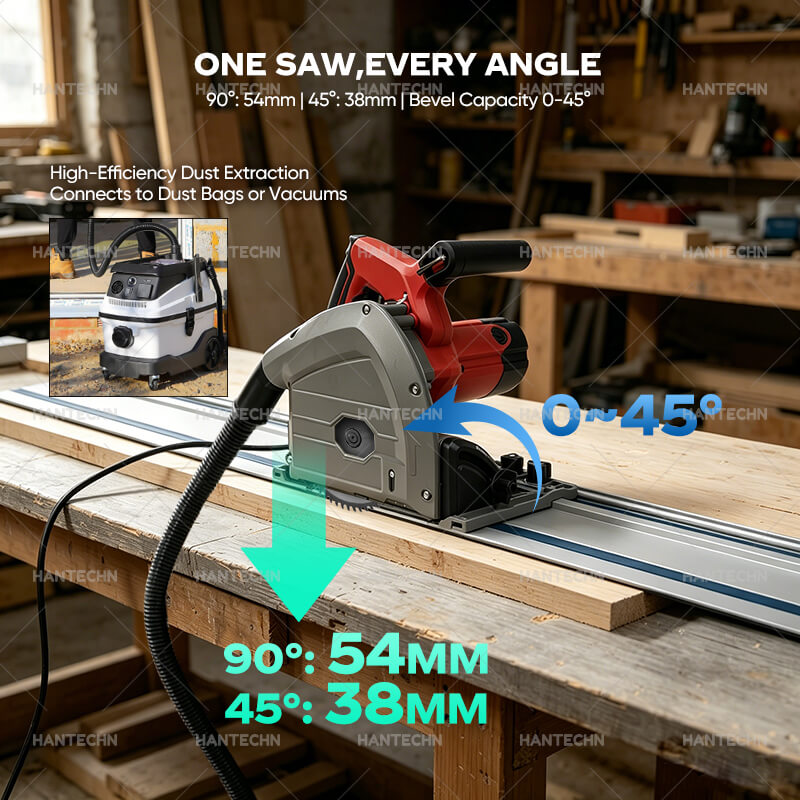
A track saw, also known as a plunge saw or guide rail saw, is one of the most accurate portable cutting tools available for woodworking. Unlike a conventional circular saw, a track saw runs on a precision guide rail, allowing users to produce perfectly straight, splinter-free cuts with exceptional repeatability.
Professional cabinet makers, furniture manufacturers, flooring installers, and finish carpenters rely on track saws because they combine the portability of a circular saw with cutting accuracy approaching that of a table saw.
Modern track saws are suitable for:
- Cabinet production
- Furniture manufacturing
- Kitchen countertop installation
- Interior finishing
- Hardwood flooring
- Laminate flooring
- Door trimming
- Plywood processing
- MDF cutting
- Composite panel cutting
Whether you are a professional contractor or a DIY enthusiast, a quality track saw can significantly improve cutting precision while reducing material waste.
Why Choose a Track Saw Instead of a Circular Saw?
Many users wonder whether a standard circular saw is sufficient. While both tools use rotating blades, their performance differs greatly.
A traditional circular saw depends largely on the operator's ability to follow a cutting line. Even experienced users may encounter blade drift, uneven edges, or splintering. A track saw, on the other hand, is guided by a precision rail that keeps the blade perfectly aligned throughout the cut.
Advantages of a Track Saw
- Cleaner cuts with minimal tear-out
- Exceptional straight-line accuracy
- Safe plunge cutting
- Easy bevel cutting
- Better dust collection
- Reduced kickback
- Professional-quality finish
- Improved repeatability for batch production
For projects involving expensive materials such as plywood, veneered panels, or hardwood, these advantages quickly justify the investment.
How Does a Plunge Track Saw Work?
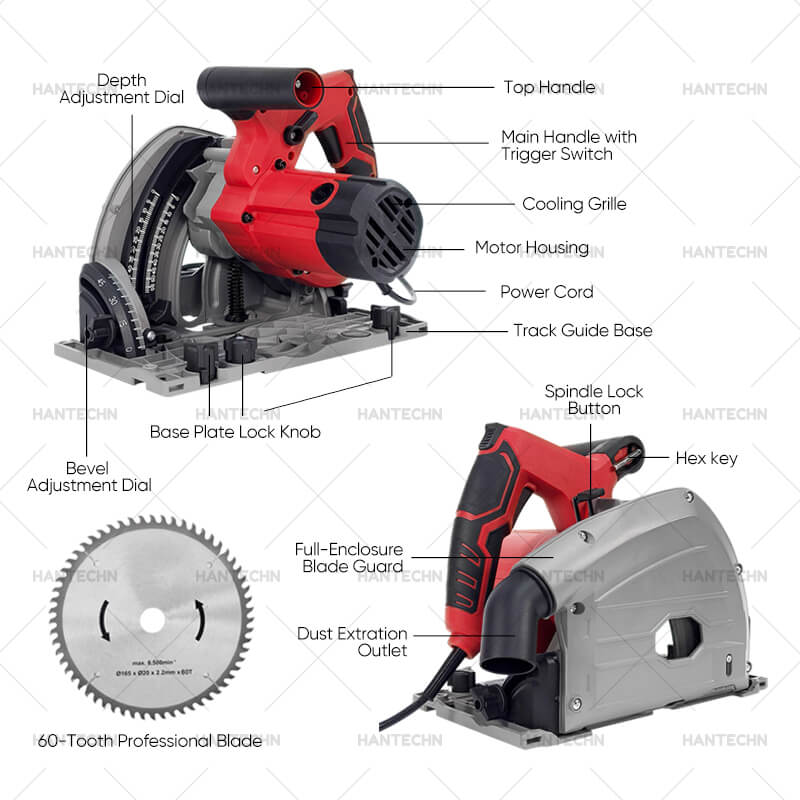
Unlike a fixed-blade circular saw, a plunge saw keeps the blade enclosed inside the housing until the operator presses the plunge mechanism. This design improves safety while allowing precise entry cuts anywhere on the workpiece.
The guide rail features anti-slip strips and zero-clearance edges that minimize splintering and ensure smooth, accurate guidance.
When the saw is placed on the rail:
- The rail controls cutting direction.
- The plunge mechanism controls blade depth.
- The operator controls feed speed.
- Dust extraction removes chips and dust during cutting.
The result is cleaner cuts with less effort and greater consistency.
Professional Applications
A professional track saw is one of the most versatile power tools in any workshop.
Cabinet Manufacturing
Track saws excel at cutting cabinet panels accurately without requiring a large table saw.
Typical applications include:
- Side panels
- Shelves
- Drawer fronts
- Cabinet backs
- Face frame components
Furniture Manufacturing
Furniture makers frequently cut:
- Oak
- Walnut
- Pine
- Birch plywood
- MDF
- Veneered panels
Straight, splinter-free cuts reduce sanding and finishing time.
Kitchen Installation
Kitchen installers regularly trim:
- Countertops
- Decorative panels
- End panels
- Fillers
- Cabinets
The plunge function makes sink and cooktop cutouts significantly easier.
Flooring Installation
Professional flooring contractors use guide rail saws for:
- Engineered flooring
- Hardwood flooring
- Laminate flooring
- Vinyl composite flooring
Accurate cuts improve installation speed while reducing waste.
Materials You Can Cut
A professional 1200W track saw can process a wide range of materials.
Suitable materials include:
Wood
- Pine
- Oak
- Maple
- Beech
- Walnut
Engineered Panels
- MDF
- HDF
- Plywood
- Particle Board
- Melamine Board
- OSB
Decorative Materials
- Laminate
- Veneered Panels
- Composite Panels
- Honeycomb Panels
Plastics
- Acrylic
- PVC
- ABS
- Polycarbonate
Non-Ferrous Metals
With the appropriate blade, the saw can also cut:
- Aluminum profiles
- Aluminum sheets
- Brass
- Copper
How to Choose the Right Track Saw
Choosing the right plunge saw depends on more than motor power alone.
Motor Power
For professional woodworking, a motor between 1200W and 1800W provides sufficient power for demanding applications.
A 1200W motor offers an excellent balance between cutting performance, portability, and energy efficiency.
Cutting Speed
Higher blade speed generally produces cleaner cuts.
A no-load speed of 6000 RPM ensures:
- Smooth cutting
- Reduced splintering
- Better cutting efficiency
- Improved blade performance
Cutting Depth
Deep cutting capacity increases versatility.
Example:
With Guide Rail
- 54 mm at 90°
- 38 mm at 45°
Without Guide Rail
- 59 mm at 90°
- 42 mm at 45°
This allows cutting most construction and furniture materials in a single pass.
Variable Speed Control
Different materials require different blade speeds.
Lower speeds are recommended for:
- Plastics
- Aluminum
- Acrylic
Higher speeds are ideal for:
- Solid wood
- MDF
- Plywood
Variable speed improves both blade life and cutting quality.
Dust Collection
Efficient dust extraction offers several advantages:
- Cleaner workspace
- Better visibility
- Longer blade life
- Healthier working environment
Connecting the saw to a vacuum system can remove the majority of airborne dust.
Choosing the Right Blade
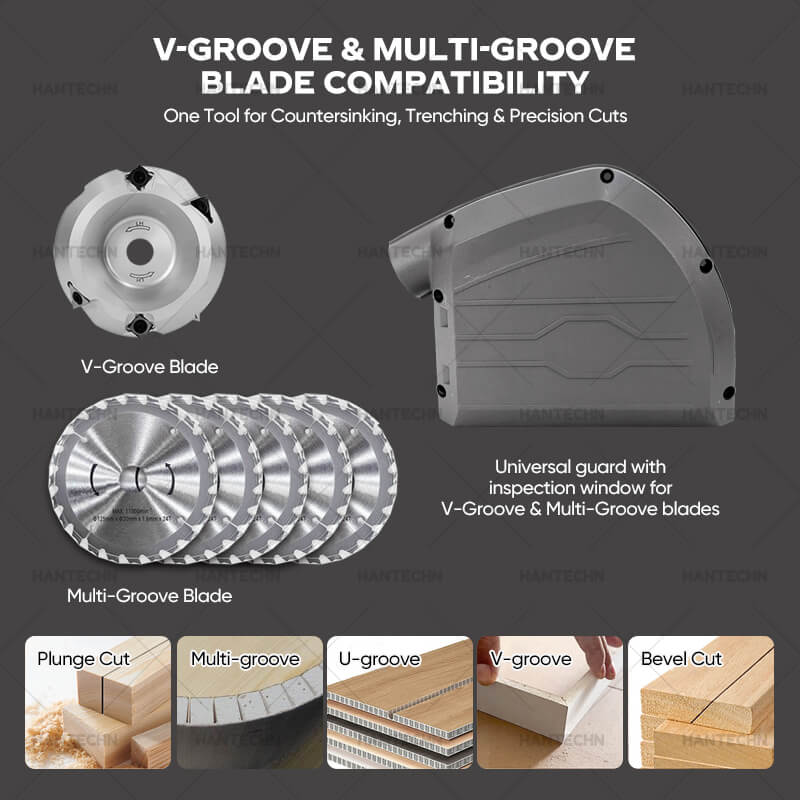
Selecting the proper blade is essential for achieving clean cuts.
General Wood Blade
Ideal for:
- Softwood
- Hardwood
- MDF
- Plywood
Fine Finish Blade
Higher tooth count provides:
- Cleaner edges
- Less tear-out
- Better surface quality
Recommended for furniture production.
Aluminum Blade
Designed specifically for non-ferrous metals.
Provides smoother cuts while reducing burr formation.
Groove Blade
Perfect for:
- Decorative grooves
- Cable channels
- Expansion joints
Track Saw vs Table Saw
Many professionals own both tools because each has unique advantages.
A table saw is excellent for repetitive rip cuts in a workshop, while a track saw excels in portability and handling large sheet materials. Full plywood sheets are often easier and safer to cut with a track saw than to maneuver across a table saw.
For contractors working on-site, a track saw is usually the more practical choice because it delivers workshop-level accuracy without requiring a dedicated cutting station.
Safety Tips
Professional users follow several basic safety practices:
- Inspect the blade before each use.
- Secure the guide rail properly.
- Wear eye and hearing protection.
- Use dust extraction whenever possible.
- Keep both hands on the saw during operation.
- Never force the saw through the material.
- Allow the blade to reach full speed before cutting.
- Wait for the blade to stop completely before lifting the tool.
Proper safety habits not only protect the operator but also improve cut quality.
Maintenance Guide
Routine maintenance helps ensure consistent performance and extends tool life.
- Clean dust from the motor vents after each use.
- Wipe the guide rail to remove debris.
- Inspect the blade regularly for wear or damage.
- Tighten loose fasteners before operation.
- Lubricate moving parts as recommended.
- Store the saw in a dry environment.
- Replace worn blades promptly to maintain cutting quality.
Well-maintained equipment delivers more accurate results and reduces long-term operating costs.
Frequently Asked Questions
Can a track saw replace a table saw?
For many woodworking tasks, especially cutting sheet materials and performing on-site installations, a track saw can replace a table saw. However, a table saw remains advantageous for high-volume repetitive rip cuts.
Is a guide rail necessary?
Yes. The guide rail is the key component that enables straight, accurate, splinter-free cuts.
Can a track saw cut aluminum?
Yes, provided that an appropriate non-ferrous metal blade is used and the cutting speed is adjusted accordingly.
What is the ideal motor power?
A 1200W motor is suitable for most woodworking applications, while larger commercial operations may prefer higher-powered models.
Can beginners use a track saw?
Absolutely. Thanks to the guide rail and plunge mechanism, many beginners find a track saw easier and safer to control than a conventional circular saw.
Why is dust extraction important?
Dust extraction improves visibility, protects the motor, extends blade life, and creates a healthier working environment by reducing airborne particles.
Why Choose This 1200W Professional Track Saw?
This professional plunge saw is designed to deliver the precision demanded by woodworkers, contractors, and serious DIY users.
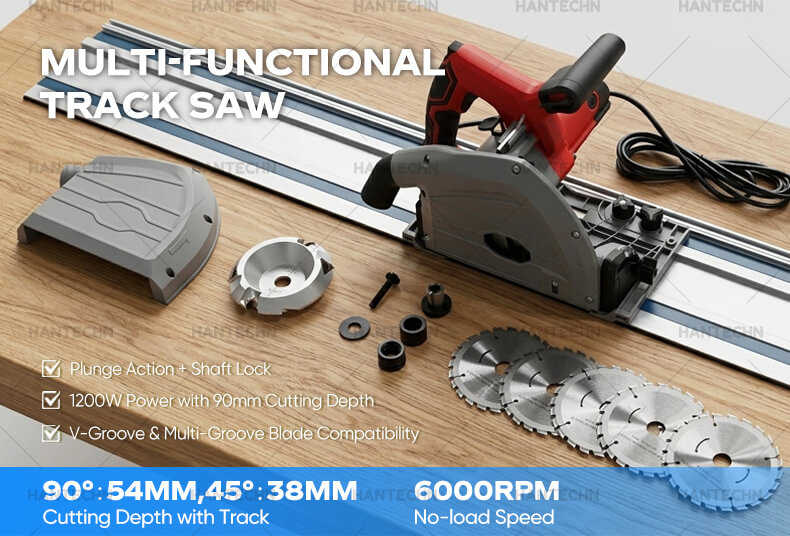
Key Specifications:
- Voltage: 230–240V~, 50Hz
- Rated Power: 1200W
- No-load Speed: 6000 RPM
- Arbor Diameter: 20 mm
- Cutting Depth with Guide Rail: 54 mm (90°) / 38 mm (45°)
- Cutting Depth without Guide Rail: 59 mm (90°) / 42 mm (45°)
- Bevel Range: 0–45°
- Variable Speed Control: 6 Levels
- Integrated Dust Extraction Port
- Spindle Lock for Quick Blade Changes
- Inspection Window for Improved Visibility
- Ergonomic Soft-Grip Handle
- 1.8 m VDE H05RN-F Power Cable
Whether you are cutting hardwood, plywood, MDF, laminate, aluminum, or composite panels, this versatile track saw provides the accuracy, reliability, and efficiency needed for professional-grade results.
Conclusion
A professional track saw is more than just another cutting tool—it is a long-term investment in precision, productivity, and craftsmanship. By combining the portability of a circular saw with the accuracy of a guide rail system, it enables cleaner cuts, greater efficiency, and superior results across a wide range of woodworking and construction projects.
Whether you're building custom furniture, installing kitchens, fitting flooring, or handling daily jobsite tasks, a high-quality 1200W plunge saw delivers the performance professionals demand and the ease of use that DIY enthusiasts appreciate. Choose the right blade, maintain your tool properly, and you'll enjoy years of reliable, precise cutting performance.
Post time: Jul-10-2026