

A beautiful lawn has always been a symbol of a well-maintained home, but keeping grass healthy and evenly trimmed often requires significant time and effort. Traditional lawn mowing involves regular maintenance, fuel or electricity costs, noise, and physical labor. Today, homeowners are increasingly choosing household robot lawn mowers as a smarter, quieter, and more efficient solution.
Whether you own a small backyard or a large residential garden, a robotic lawn mower can automate lawn care while improving grass health and reducing maintenance costs. In this guide, we'll explain how household robot lawn mowers work, their key advantages, what features to consider, and how to choose the right model for your home.
What Is a Household Robot Lawn Mower?
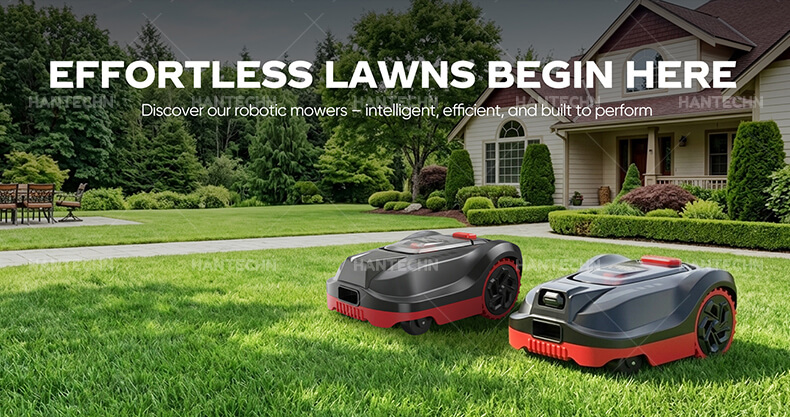
A household robot lawn mower is an autonomous lawn care machine designed to mow residential grass without constant human intervention. Similar to a robotic vacuum cleaner, it navigates around your yard, trims grass regularly, returns to its charging station automatically, and can often be controlled through a smartphone app.
Modern robotic lawn mowers use advanced technologies such as GPS positioning, RTK navigation, AI vision, ultrasonic sensors, obstacle detection, and intelligent route planning to maintain a consistently healthy lawn with minimal effort.
Instead of cutting large amounts of grass at once, robot mowers operate more frequently, trimming only small amounts each session. This creates natural grass mulch that decomposes quickly, returning nutrients to the soil and promoting healthier lawn growth.
Why More Homeowners Are Switching to Robot Lawn Mowers
The popularity of robotic lawn mowers has grown rapidly in recent years as homeowners seek more convenient and environmentally friendly lawn care solutions.
Some of the biggest reasons include:
- Significant time savings through fully automated mowing
- Consistently neat and professional-looking lawns
- Quiet operation suitable for residential neighborhoods
- Zero direct emissions compared with gasoline-powered mowers
- Lower long-term maintenance costs
- Smart scheduling and remote control through mobile apps
- Improved lawn health with frequent micro-cutting
Rather than spending weekends pushing a heavy mower, homeowners can simply schedule mowing sessions and let the robot handle the work automatically.
How Does a Household Robot Lawn Mower Work?
Although robotic lawn mowers look compact, they integrate several advanced technologies to deliver efficient and safe operation.
Intelligent Navigation
Entry-level models may follow random mowing patterns, while premium models use GPS, RTK, AI vision, or camera-based navigation to create highly efficient mowing routes.
Advanced navigation systems reduce overlapping, improve coverage, and shorten mowing time.
Obstacle Detection
Built-in sensors detect trees, flower beds, outdoor furniture, pets, and other obstacles. Many high-end models automatically slow down, change direction, or reroute without damaging surrounding objects.
Automatic Charging
When battery power runs low, the mower automatically returns to its charging station before resuming unfinished work.
This allows fully automated lawn maintenance without manual intervention.
Smart App Control
Most modern robot lawn mowers connect to Wi-Fi or Bluetooth, allowing users to:
- Schedule mowing times
- Adjust cutting height
- Monitor mower location
- Receive maintenance reminders
- Update firmware
- Start or stop mowing remotely
Some models even integrate with smart home ecosystems for voice control.
Wire Boundary vs Wire-Free Robot Lawn Mowers
One of the biggest innovations in today's market is the development of wire-free robotic lawn mowers.
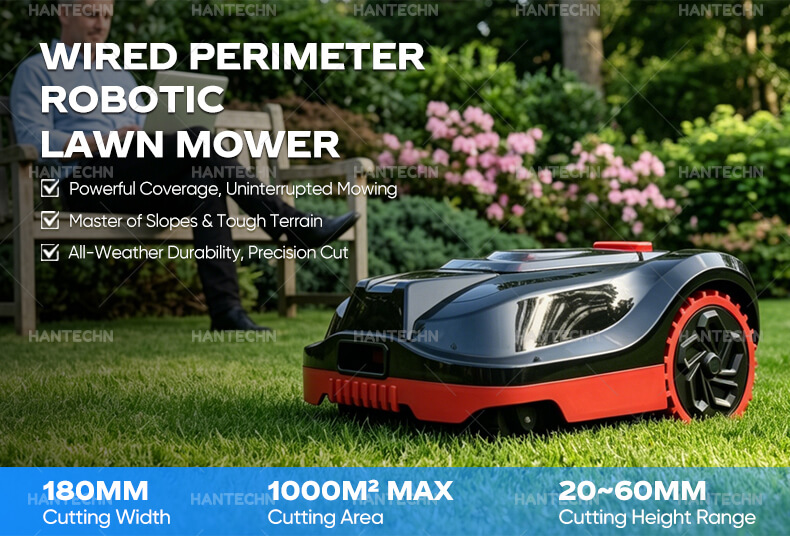
Boundary Wire Models
Traditional robotic mowers require perimeter wires installed around the lawn to define mowing boundaries.
Advantages:
- Lower purchase price
- Reliable operation
- Mature technology
Limitations:
- Installation takes time
- Difficult to modify lawn layout
- Wire repairs may be necessary over time
Wire-Free Models
Modern wire-free robot lawn mowers use RTK positioning, GPS, cameras, or AI vision instead of physical boundary wires.
Advantages:
- Fast installation
- Flexible virtual boundaries
- Easy multi-zone management
- Cleaner lawn appearance
- Convenient seasonal adjustments
For homeowners planning a new purchase, wire-free technology offers greater convenience and future-ready performance.
Key Benefits of Household Robot Lawn Mowers
Save Valuable Time
One of the greatest advantages is automation. Instead of spending hours mowing every week, homeowners can focus on family, work, or leisure while the mower operates independently.
Healthier Grass
Frequent mowing encourages denser, greener, and healthier turf. Fine grass clippings act as natural fertilizer, helping retain moisture and nutrients.
Lower Noise Levels
Unlike traditional gas-powered lawn mowers, robotic mowers operate quietly, making them suitable for early morning or evening use without disturbing neighbors.
Eco-Friendly Lawn Care
Electric robot mowers produce no direct emissions during operation and consume significantly less energy than conventional fuel-powered equipment.
Improved Safety
Modern robotic mowers include lift sensors, tilt sensors, collision detection, emergency stop buttons, and automatic blade shutdown when necessary.
Choosing the Right Household Robot Lawn Mower
Selecting the right robotic lawn mower depends on several important factors.
Lawn Size
Always choose a mower designed to cover your property's total mowing area. Larger batteries and wider cutting widths improve efficiency for bigger lawns.
Terrain
If your yard includes slopes or uneven ground, look for models with high climbing capability and strong traction.
Navigation Technology
Advanced navigation systems improve mowing efficiency while reducing missed areas and unnecessary overlap.
Battery Performance
Higher-capacity batteries provide longer mowing sessions and reduce charging frequency.
Smart Features
Useful smart functions include:
- Mobile app control
- Weather adaptation
- Multi-zone management
- Theft protection
- GPS tracking
- OTA software updates
Robot Lawn Mower vs Traditional Lawn Mower
| Feature | Robot Lawn Mower | Traditional Lawn Mower |
|---|---|---|
| Labor | Fully automatic | Manual operation |
| Noise | Low | Medium to high |
| Emissions | Electric, zero direct emissions | Gas models produce emissions |
| Lawn Quality | Consistent maintenance | Depends on mowing frequency |
| Time Required | Minimal | High |
| Smart Control | Yes | Usually unavailable |
For homeowners seeking convenience, consistency, and long-term efficiency, robotic lawn mowers offer clear advantages.
Simple Maintenance Tips
Although robotic lawn mowers require much less maintenance than traditional machines, regular care helps maximize performance.
Recommended maintenance includes:
- Clean the cutting deck regularly.
- Remove grass buildup from wheels.
- Inspect blades for wear and replace when needed.
- Keep charging contacts clean.
- Install firmware updates promptly.
- Store the mower in a dry location during winter if not in use.
Routine maintenance usually takes only a few minutes and can significantly extend the product's lifespan.
Frequently Asked Questions
Are robotic lawn mowers worth buying?
Yes. For homeowners who value convenience, time savings, and consistently healthy lawns, robotic lawn mowers provide an excellent long-term investment.
Can robot lawn mowers work in the rain?
Many models are weather-resistant, but premium mowers often include rain sensors that automatically pause mowing during heavy rainfall to protect both the lawn and the machine.
Can robotic mowers handle slopes?
Yes. Many residential models can climb slopes between 25% and 45%, while advanced models can manage even steeper terrain.
Are robot lawn mowers safe around pets and children?
Modern robotic lawn mowers are equipped with multiple safety sensors that stop the blades when the machine is lifted, tilted, or encounters unexpected obstacles. However, supervision is still recommended when children or pets are playing on the lawn.
How long do robot lawn mowers last?
With proper maintenance, a quality robotic lawn mower can provide reliable performance for many years. Battery replacement may eventually be required depending on usage.
Final Thoughts
Household robot lawn mowers are transforming the way homeowners maintain their gardens. By combining intelligent navigation, automated scheduling, quiet operation, and energy-efficient performance, these machines deliver beautiful lawns with far less effort than traditional mowing methods.
Whether you have a compact backyard or a large residential property, investing in a smart robotic lawn mower can save time, improve lawn health, reduce maintenance costs, and make outdoor care easier than ever.
As technologies such as AI vision, RTK positioning, and wire-free navigation continue to evolve, robotic lawn mowers are becoming an essential part of the modern smart home. Choosing the right model today means enjoying a greener, healthier, and perfectly maintained lawn for years to come.
Post time: Jul-02-2026