

Maintaining large commercial landscapes has become increasingly difficult. Labor shortages, rising wages, fuel costs, and sustainability requirements are forcing businesses to rethink traditional lawn maintenance.
Commercial robotic lawn mowers are rapidly becoming the preferred solution for golf courses, sports facilities, municipalities, hotels, corporate campuses, and large green spaces.
This guide explains how commercial robot mowers work, where they deliver the greatest value, and how businesses can reduce maintenance costs while improving turf quality.
What Is a Commercial Robotic Lawn Mower?
A commercial robotic lawn mower is an autonomous machine designed to maintain large turf areas without human operation.
Unlike residential robot mowers, commercial models are built for:
- Large acreage
- Continuous operation
- Fleet management
- Remote monitoring
- Professional-grade cutting
- Complex commercial environments
Many modern systems use RTK GPS, AI vision, and cloud connectivity to deliver precise mowing without boundary wires.
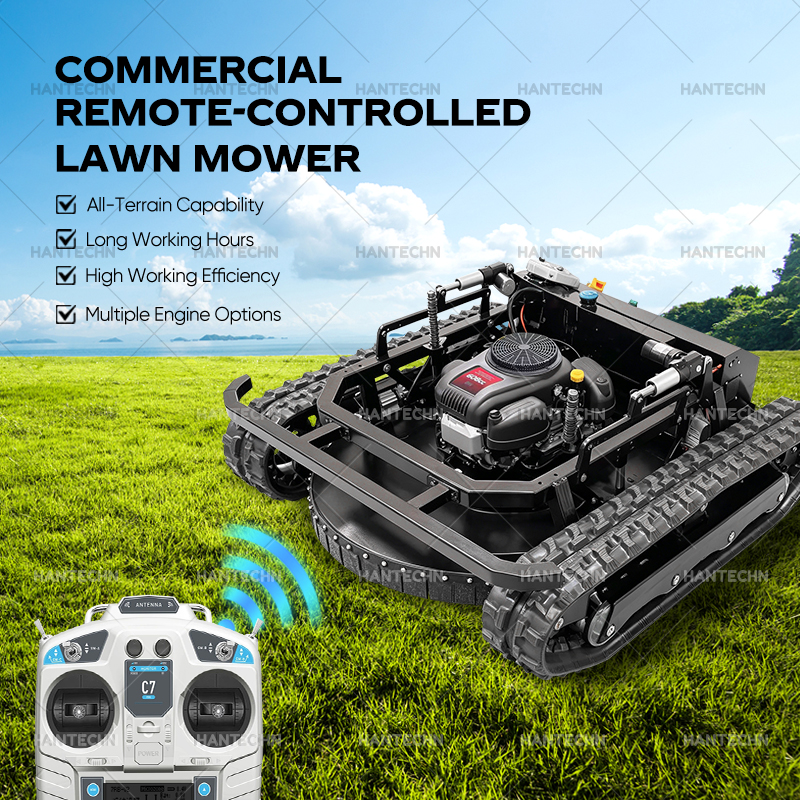
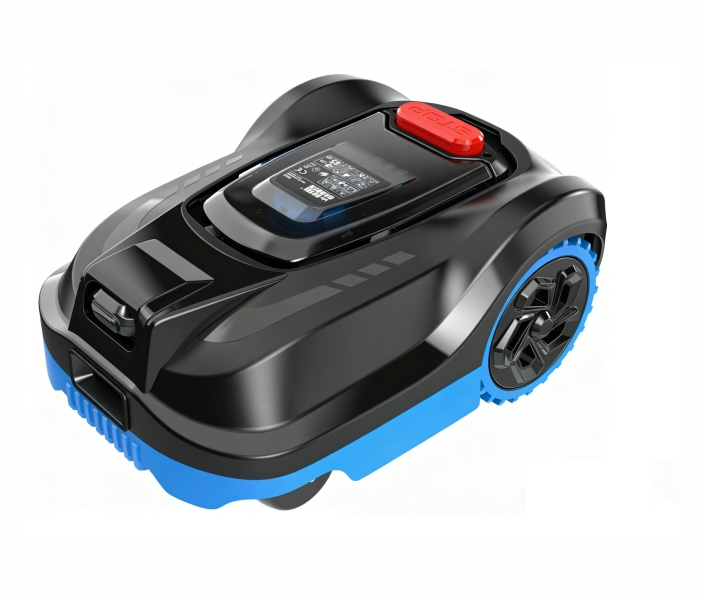
Residential vs Commercial Robotic Mowers
Residential robots typically cover small gardens and private lawns.
Commercial robotic mowers are designed for:
- Golf courses
- Sports fields
- Municipal parks
- Hotels
- Schools
- Solar farms
- Industrial facilities
Commercial units offer higher productivity, stronger motors, advanced navigation, and centralized fleet management.
Why Businesses Are Switching to Autonomous Mowing
Several market factors are driving adoption:
Labor shortages
Finding skilled landscaping workers has become increasingly difficult.
Rising operating costs
Fuel, labor, insurance, and equipment maintenance continue to increase.
Sustainability goals
Electric robotic mowers produce zero direct emissions and significantly reduce noise pollution.
Better turf quality
Frequent mowing creates healthier, denser grass and improves overall appearance.
Applications for Commercial Robot Mowers
Golf Courses
Fairways, roughs, practice ranges, and surrounding areas can be maintained automatically.
Sports Fields
Football, soccer, baseball, and training facilities benefit from consistent cutting quality.
Public Parks
Municipalities can reduce operating budgets while maintaining green spaces.
Hotels and Resorts
Quiet operation allows mowing during daytime without disturbing guests.
Corporate Campuses
Robotic mowing improves appearance while reducing maintenance labor.
Solar Farms
Large open areas around solar installations are ideal for autonomous mowing.
How Commercial Robotic Mowers Work
RTK Positioning
RTK technology provides centimeter-level positioning accuracy.
AI Obstacle Detection
Cameras and sensors detect obstacles, people, and objects.
Multi-Zone Management
Operators can create multiple mowing areas and schedules.
Fleet Management
Multiple robots can work simultaneously under centralized control.
Cloud platforms allow managers to monitor performance remotely.
Labor Costs Continue to Rise
Landscaping businesses worldwide face increasing labor costs.
Commercial robotic mowers can operate:
- Day and night
- Seven days a week
- Without overtime costs
- Without fuel expenses
One operator can supervise multiple machines.
Cost Savings and ROI
Typical savings include:
- Reduced labor expenses
- Lower fuel costs
- Less maintenance
- Fewer replacement parts
Many commercial users achieve payback periods between two and four years depending on labor rates and mowing area.
Commercial Robot Mowers vs Traditional Crews
| Factor | Robot Mower | Traditional Crew |
|---|---|---|
| Labor Cost | Low | High |
| Fuel | None | High |
| Noise | Very Low | High |
| Emissions | Zero | High |
| Working Hours | 24/7 | Limited |
| Consistency | Excellent | Variable |
| Safety | High | Moderate |
Key Features to Look For
When selecting a commercial robotic mower, buyers should evaluate:
- Coverage area
- Battery capacity
- Slope performance
- Navigation technology
- Fleet management
- Remote monitoring
- Weather resistance
- Safety systems
Common Challenges
GPS Signal Limitations
Dense trees or buildings can affect positioning.
Large Obstacles
Construction areas may require temporary exclusion zones.
Initial Setup
Professional installation improves long-term performance.
Future Trends
Commercial mowing technology continues to evolve.
Future developments include:
- AI navigation
- Vision systems
- Autonomous charging
- Predictive maintenance
- Fleet intelligence
- Cloud analytics
Autonomous turf management is expected to become a standard practice for commercial properties.
Frequently Asked Questions
Are commercial robotic mowers safe?
Yes. Modern systems use sensors, obstacle detection, emergency stop functions, and remote monitoring.
Can robotic mowers work in rain?
Most commercial models are weather resistant and can operate in light rain.
How large an area can one mower cover?
Coverage varies depending on model and operating schedule.
Can multiple robots work together?
Yes. Fleet management systems allow multiple units to mow large properties simultaneously.
Why Choose Hantechn Commercial Robot Mowers
Hantechn commercial robotic mowers are designed for professional applications including:
- Large commercial lawns
- Sports facilities
- Public landscapes
- Industrial properties
Advanced navigation, intelligent control systems, and reliable performance help businesses reduce costs while maintaining premium turf quality.
As labor shortages continue and sustainability becomes increasingly important, commercial robotic mowers are becoming an essential investment for professional landscape management.
Post time: Jun-25-2026