

For distributors and dealers in the outdoor power equipment industry, understanding the intricacies of chainsaw chains and bars isn't just technical knowledge—it's a pathway to increased sales, customer satisfaction, and repeat business. Whether you're supplying professional loggers, arborists, or homeowners, having deep product knowledge helps you guide customers to the right choices while maximizing your profit potential through accessory sales.
Understanding the Cutting System: Chains + Bars
The chainsaw's cutting system consists of two critical components working together: the guide bar and the chain. While many customers focus solely on the powerhead, the truth is that performance and profit often lie in the accessories.
Let's break down what your customers need to know—and what you need to know to serve them better.
Part One: Chainsaw Chains – The Cutting Edge
The Three Critical Chain Measurements
Every chainsaw chain has three essential specifications that must match the saw and bar:
| Measurement | What It Means | How to Find It |
|---|---|---|
| Pitch | Distance between three consecutive rivets, divided by two (measured in inches) | Stamped on the bar or in the manual |
| Gauge | Thickness of the drive links that fit into the bar groove | Stamped on the bar; requires caliper for accurate measurement |
| Drive Links | Total number of drive links in the chain | Must be counted precisely |
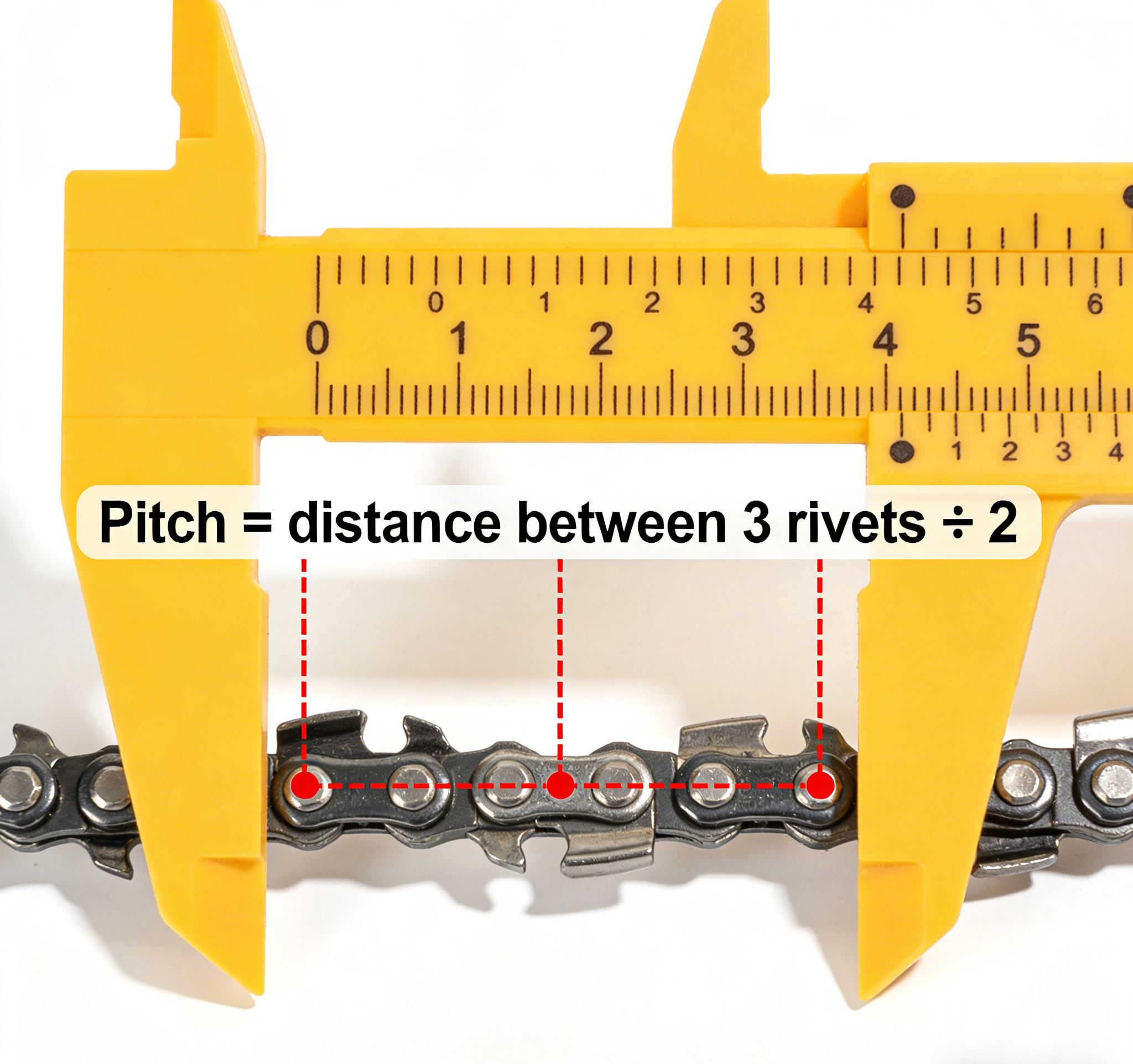
Why this matters for your customers: Using the wrong pitch or gauge compromises performance, accelerates wear, and creates safety risks. For you, it means returned products and unhappy customers.
Chain Types: Matching the Tool to the Task
Different chain designs serve different purposes. Here's what your customers need to know:
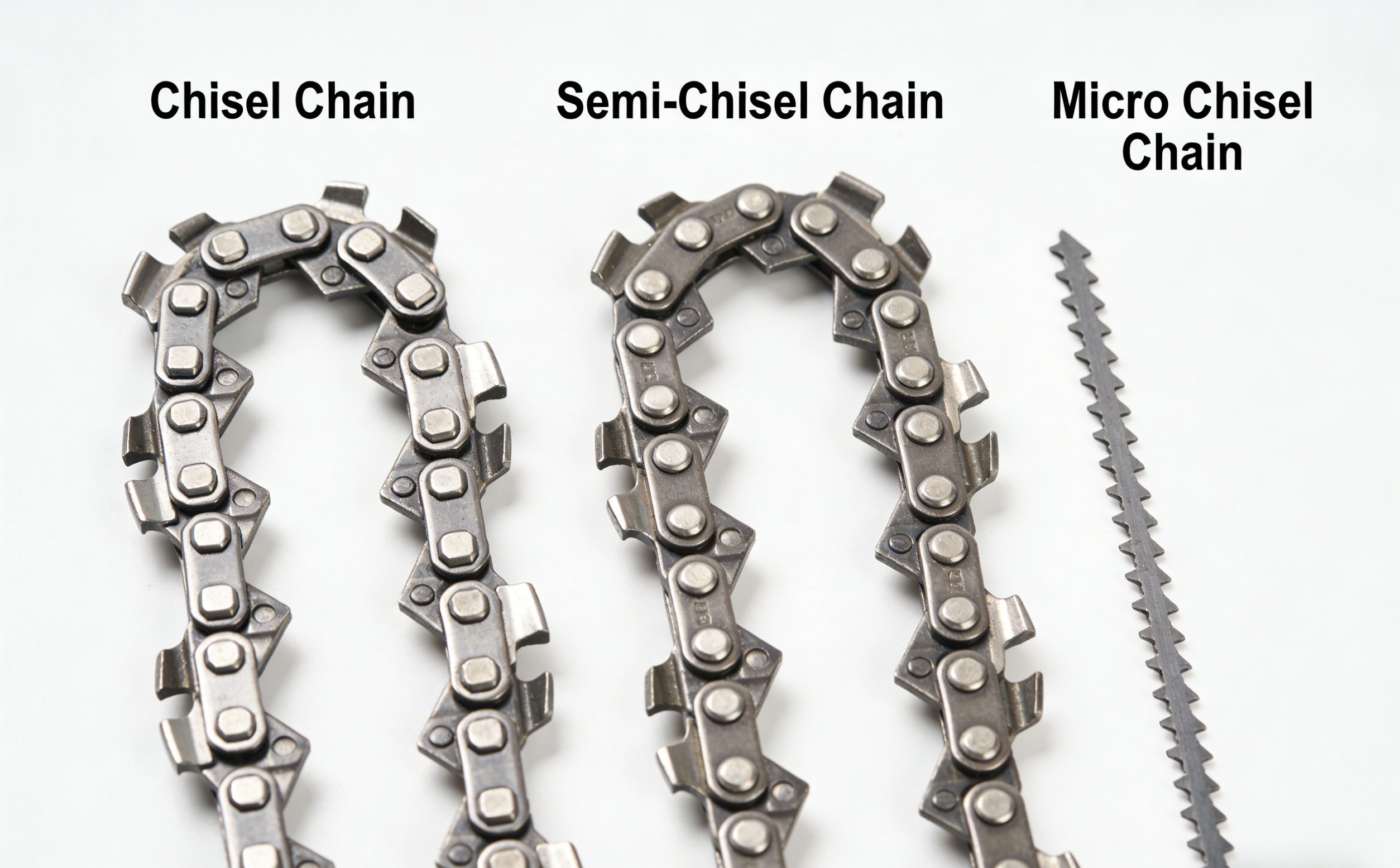
Chisel Chain
- Features: Square-cornered, L-shaped cutting teeth
- Performance: Fastest cutting, aggressive action
- Best for: Professional use in clean softwood where speed matters most
- Trade-off: Dulls quickly, especially in dirty conditions; higher kickback risk
Semi-Chisel Chain
- Features: Rounded tooth corners
- Performance: Smooth cuts, longer edge life, less vibration
- Best for: General-purpose use, dirty or frozen wood, less experienced operators
- Advantage: More forgiving, resists damage from debris
Micro Chisel Chain
- Features: Narrow kerf, rounded tooth design
- Performance: Precise cuts, low vibration
- Best for: Pole saws, pruning, light-duty electric saws
-
Chain Arrangements: Standard vs. Skip
Beyond tooth shape, chains also vary in how the teeth are arranged:
Chain Type Tooth Arrangement Best Application Standard Maximum number of teeth (each joining link followed by a tooth) Most applications; best cutting performance Semi-Skip Alternates between 1 and 2 joining links between teeth Underpowered saws; longer bars Skip Two joining links separate teeth Very long bars (over 20"); reduces drag Pro Tip for Distributors: Stock a range of chain types so customers can optimize their saws for specific applications. This turns a single saw sale into multiple accessory purchases.
Troubleshooting Common Chain Problems
Even with the right chain, issues can arise. Here's how to help your customers diagnose and solve common problems:
Problem Likely Cause Solution Chain dulls quickly Cutting dirty/abrasive wood; incorrect filing angle Clean wood before cutting; check filing angle (typically 30°) Chain cuts crooked Uneven tooth length on one side Needs professional filing or chain replacement Chain comes off bar Incorrect tension; worn bar groove Adjust tension; inspect/replace bar if groove is worn Excessive vibration Dull chain; damaged drive sprocket Sharpen chain; inspect sprocket for wear Smoking chain Insufficient lubrication Check oil level and oil passage; use proper bar and chain oil 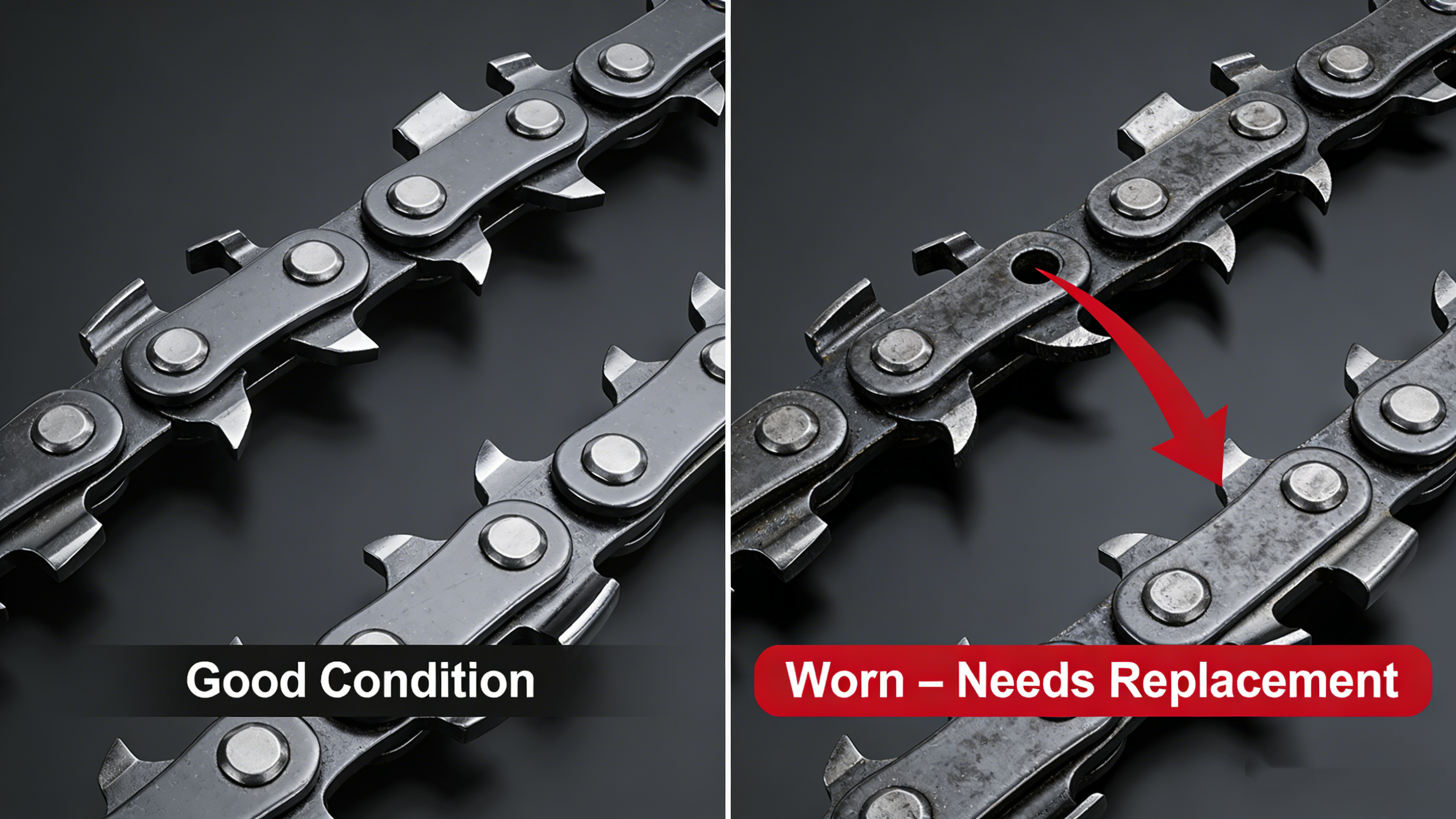
Part Two: Guide Bars – The Foundation
Bar Length: Matching Size to Job
Guide bar length determines cutting capacity, but longer isn't always better. Here's a practical guide:
Small Bar (Up to 12"/30 cm)
- Best for: Pruning, small branches, light garden cleanup
- User level: Beginner/Homeowner
- Power source: Electric/Battery
- Advantages: Lightweight, excellent control, safer
Medium Bar (14"-18"/35-45 cm)
- Best for: Felling small-medium trees, firewood cutting, general property maintenance
- User level: Semi-Professional/Enthusiast
- Power source: Mid-range gas, high-power battery
- Advantages: Versatile, balanced power and portability
Large Bar (20"+ / 50cm+)
- Best for: Logging, large tree felling, professional timber processing
- User level: Professional/Commercial
- Power source: High-displacement gas engines
- Advantages: Maximum cutting depth, commercial productivity
Important Rule: A bar should not exceed the manufacturer's recommended maximum length for a given saw. Using an oversized bar on an underpowered saw reduces efficiency, increases wear, and is dangerous.
Bar Materials and Construction
Not all guide bars are created equal. Understanding construction helps customers choose durability that matches their needs:
Bar Type Construction Best For Lifespan Laminated Bar Multiple steel layers bonded together Occasional/homeowner use Moderate Solid Bar Single piece of hardened steel Professional daily use Longest Sprocket-Nose Bar Replaceable sprocket at tip All-purpose; extends bar life Replace sprocket, extend bar life Bar Maintenance Tips for Your Customers
Guide bars require regular attention to perform well and last longer:
- Clean the bar groove after each use to remove sawdust and debris
- Check the sprocket nose for wear and lubricate as needed
- Turn the bar over each time you change or sharpen the chain to ensure even wear
- Deburr the bar rails when sharp edges develop
- Clean the oil inlet hole to ensure proper lubrication
-
Part Three: Maintenance That Drives Repeat Business
Regular maintenance is essential for performance, safety, and longevity. This is also your opportunity for ongoing sales.
Daily Maintenance Checklist
Task Frequency Why It Matters Check chain tension Before each use Loose chains derail; tight chains strain the engine Check chain lubrication Before each use Prevents overheating and wear Sharpen chain As needed (dull chain = slow cutting) A sharp chain requires less effort and cuts safely Clean exterior After each use Removes resin and sawdust that cause problems Signs a Chain Needs Sharpening
- You must push the saw into the wood rather than letting it cut
- The saw cuts sideways or wanders
- The saw produces sawdust instead of wood chips
- Excessive vibration during cutting
- Cutting creates smoke (with proper lubrication)
Lubrication: The Lifeblood of the Cutting System
Using high-quality bar and chain oil is non-negotiable. Unlike engine oil, chain oil is formulated to:
- Stick to the chain at high speeds
- Reduce friction between the chain and bar
- Protect against rust and wear
For your business: Stock and promote genuine chain oil with every saw sale. It's a high-margin consumable that customers need regularly.
Common Maintenance Mistakes to Avoid
Help your customers avoid these costly errors:
- Overtensioning the chain – This puts excessive stress on the bar and engine. The chain should pull freely but not sag.
- Using motor oil instead of bar and chain oil – Motor oil flings off at high speeds, leaving the chain dry and causing rapid wear.
- Neglecting to clean the bar groove – Packed sawdust prevents proper oil flow and causes overheating.
- Running a dull chain – This forces the engine to work harder, wastes fuel, and creates dangerous kickback conditions.
- Ignoring sprocket wear – A worn sprocket damages new chains; replace sprockets with every 2-3 chain changes.
-
Part Four: Building Profit Through Accessory Sales
Here's where product knowledge translates directly to your bottom line.
Accessories Every Chainsaw Owner Needs
Accessory Profit Potential Sales Opportunity Extra chains High Every customer needs spares; sell a "rotation set" Sharpening tools Medium Files, gauges, and sharpeners for ongoing maintenance Chain oil High (consumable) Sell by the case for best value Protective gear Medium Helmets, gloves, chaps, hearing protection Carrying cases Medium Protection and storage Maintenance kits High Bundle essential items for convenience The "System Sale" Approach
Instead of selling just a chainsaw, train your team to sell the complete system:
- The saw itself – matched to the customer's needs
- 2-3 extra chains – so work never stops for sharpening
- Bar and chain oil – enough for the season
- Sharpening tools – files and a filing guide
- Protective gear – because safety sells itself
- Storage solution – carry case or bag
How Smart Distributors Use This Knowledge
Train your sales team to ask targeted questions that reveal customer needs and create upselling opportunities:
"What type of wood do you cut most often?"
This simple question allows you to recommend the optimal chain (chisel for clean softwood, semi-chisel for dirty or frozen wood), demonstrate expertise, and build trust that leads to larger sales.
"How often do you use your saw?"
Occasional users need education on basic maintenance; daily users need bulk consumables and spare parts. Each requires a different sales approach.
-
Part Five: Helping Customers Choose – A Decision Framework
Use this simple framework to guide customers to the right chainsaw system:
Question 1: What will you cut?
- Small branches, pruning → Small bar (up to 12"), semi-chisel or micro chisel chain
- Firewood, storm cleanup, small trees → Medium bar (14-18"), semi-chisel chain
- Large trees, logging, commercial use → Large bar (20"+), chisel chain
Question 2: How often will you use it?
- Occasional (monthly) → Electric or small gas, focus on ease of use
- Regular (weekly) → Mid-range gas or high-power battery, prioritize durability
- Professional (daily) → Commercial-grade gas, prioritize productivity
Question 3: What's your experience level?
- Beginner → Shorter bar, anti-kickback chain, safety features
- Experienced → Match bar to specific applications
- Professional → Optimize for speed and productivity
Frequently Asked Questions
Q: How often should I replace my chain?
A: Replace when teeth are too worn to sharpen (usually after 5-10 sharpenings), when drive links show wear, or if the chain is damaged.Q: Can I use a longer bar on my saw?
A: Only if the manufacturer specifies it's compatible. An oversized bar on an underpowered saw reduces performance and can be dangerous.Q: Why does my chain smoke even with oil?
A: Check that the oil passage isn't blocked. Also ensure you're using proper bar and chain oil – motor oil won't stick to the chain at high speeds.Q: How tight should my chain be?
A: The chain should fit snugly against the bar with no sag, but pull freely around the bar when you turn the tensioner.Q: What's the difference between 3/8" and .325" pitch?
A: These are different drive link spacing standards. 3/8" is common on larger saws; .325" on mid-range saws. They are not interchangeable.
Conclusion: Knowledge = Profit
For distributors and dealers, understanding chainsaw chains and bars isn't just technical knowledge—it's a competitive advantage. When you can:
- Help customers select the right components
- Explain why proper maintenance matters
- Offer complete systems rather than just saws
- Troubleshoot problems with confidence
You build trust, increase average order value, and create repeat customers who return for accessories, parts, and their next saw purchase.
At Hantechn, we support our distributors with quality products, technical expertise, and marketing materials to help you succeed. Contact our team for product specifications, bulk pricing, or to discuss how we can grow together.
Post time: Mar-05-2026