

Introduction: A Little Care Goes a Long Way
A pressure washer is a powerful investment—whether it's used for cleaning driveways, washing vehicles, or tackling commercial jobs. But like any precision machine, its lifespan depends entirely on how well it's maintained.
A properly cared-for pressure washer can deliver reliable service for 5 to 7 years or more. A neglected one? You might be shopping for a replacement in just 2 or 3 seasons .
The good news is that extending equipment life doesn't require advanced technical skills. It just requires consistency. Here are 5 golden rules you can share with your customers to help them protect their investment—and a bonus maintenance guide they can use as a handy reference.
Rule 1: Winterize Properly—Freezing Is the #1 Killer
The Problem:
Water expands when it freezes. If even a small amount of water remains inside the pump, hoses, or spray gun when temperatures drop below freezing, the expanding ice can crack the pump housing, damage seals, and destroy internal components . This is the single most common cause of premature pressure washer failure in cold climates.
The Solution:
Drain all water after each use in cold weather
- Disconnect the water supply and garden hose
- Turn on the machine for a few seconds to expel water from the pump
- Pull the trigger on the spray gun to release pressure and drain the wand
Use pump saver/antifreeze for long-term winter storage
- For machines stored where temperatures drop below 32°F (0°C), run pump protector (RV antifreeze) through the system
- Connect a 3-foot section of garden hose to the water inlet, pour in antifreeze, and pull the starter cord or trigger to draw it through
Store indoors
- Keep the unit in a garage, shed, or basement where temperatures stay above freezing
- Coil hoses loosely and store them off the ground
Customer Tip:
"If you live where winter temperatures fall below freezing, never leave your pressure washer outside or in an unheated shed without winterizing. Five minutes of prevention can save you the cost of a new pump."
Rule 2: Protect Your Water Supply—Start with Clean Water
The Problem:
The water you put into your pressure washer directly affects its internal health. Hard water minerals can build up scale inside the pump and nozzles. Sand or sediment acts like sandpaper, wearing down seals and pistons . A clogged inlet screen or filter restricts flow, causing the pump to work harder and overheat .
The Solution:
Always use a clean water source
- Avoid drawing water from ponds, rivers, or wells without proper filtration
- If you must use non-potable water, use an inline filter rated for the job
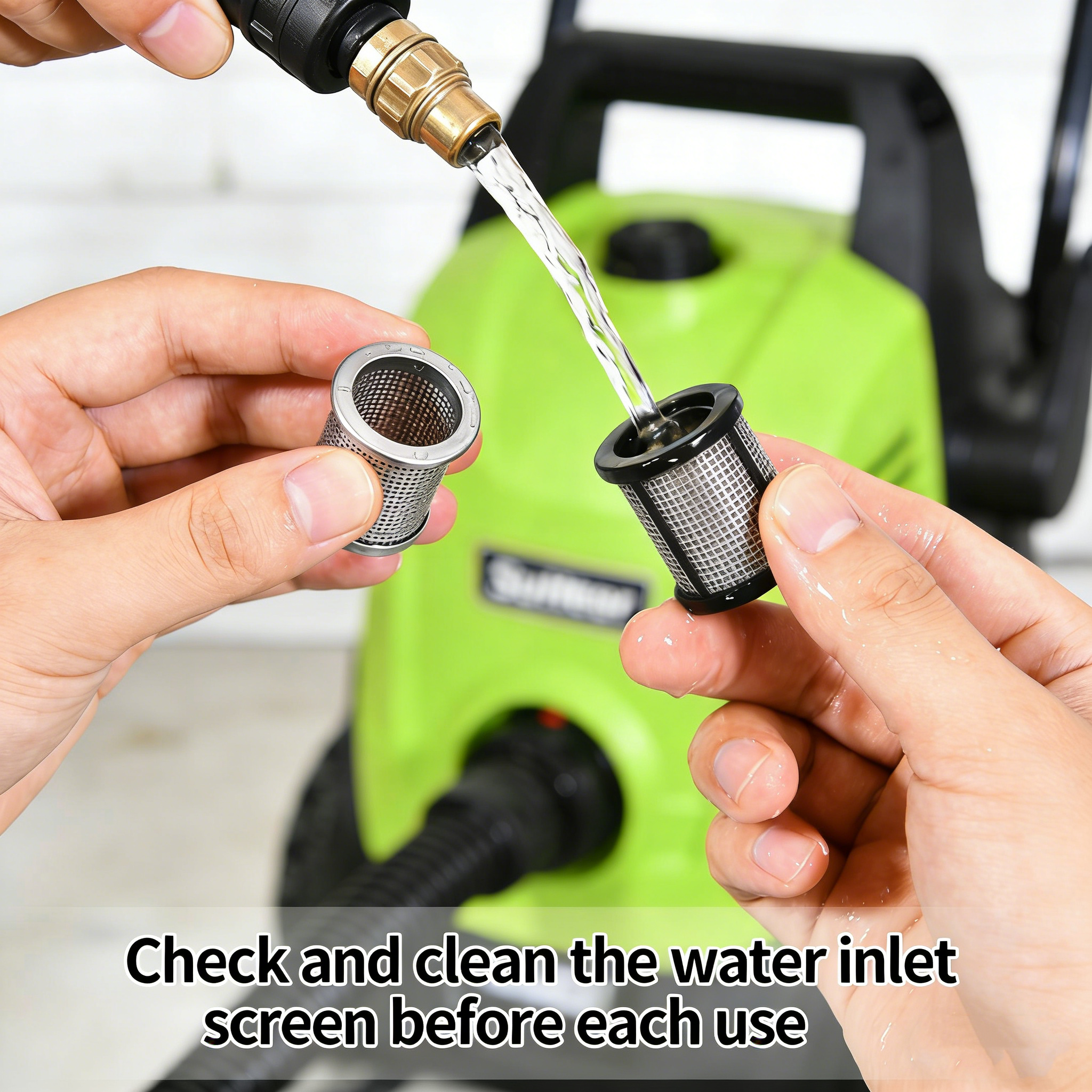
Check and clean the water inlet screen
- Inspect the screen before each use
- Remove debris and rinse clean
Flush the system after using detergents
- Run clean water through the machine for 1-2 minutes after each use
- This removes chemical residues that can corrode seals and fittings
Customer Tip:
"Think of your pressure washer's water inlet as its mouth. If you wouldn't drink the water, neither should your machine—at least not without a good filter."
Rule 3: Nozzle Care—Small Part, Big Impact
The Problem:
Nozzles are the hardest-working parts of any pressure washer. They focus water into a high-pressure jet, which means they're subject to intense wear. A clogged nozzle reduces pressure and forces the pump to work harder. A worn nozzle (enlarged orifice) drops pressure and wastes water. A damaged nozzle can create an uneven spray pattern that damages surfaces .The Solution:
Clean nozzles regularly
- Remove the nozzle from the wand
- Use the nozzle cleaning tool (often stored on the machine or manual) or an unbent paper clip to clear debris
- Back-flush with water to push out any remaining particles
Inspect for wear
- Check nozzle orifices for visible enlargement or damage
- Replace nozzles that show signs of wear—typically every 6-12 months for frequent users
Use the right nozzle for the job
- 0°: Extreme caution—for stubborn stains only
- 15°-25°: Heavy cleaning (concrete, brick)
- 40°: Gentle cleaning (cars, wood)
- Soap nozzle: Low-pressure detergent application
Customer Tip:
"A clogged nozzle doesn't just reduce cleaning power—it stresses your entire pump. Keep nozzles clean, and your pump will thank you."
Rule 4: Oil and Filter Maintenance—The Engine's Lifeblood
The Problem:
For gas-powered pressure washers, engine oil is the lifeblood of the machine. Old, dirty oil loses its lubricating properties, leading to increased friction, heat, and wear. Clogged air filters restrict airflow, causing the engine to run rich, waste fuel, and accumulate carbon deposits .The Solution:
Check oil level before each use
- Always check with the machine on level ground
- Top up with the manufacturer's recommended oil type
Change oil regularly
- First oil change: After the first 5 hours of use (for new engines)
- Routine changes: Every 50 hours or once per season
- Use SAE 10W-30 for most general-purpose engines (check your manual)
Service the air filter
- Check and clean foam filters after every 25 hours of use
- Replace paper filters annually or when visibly dirty
- Never run the engine without an air filter
Customer Tip:
"Think of oil changes as cheap insurance. A $5 quart of oil changed on time can prevent a $500 engine repair."
Rule 5: Inspect Hoses and Connections Before Every Use
The Problem:
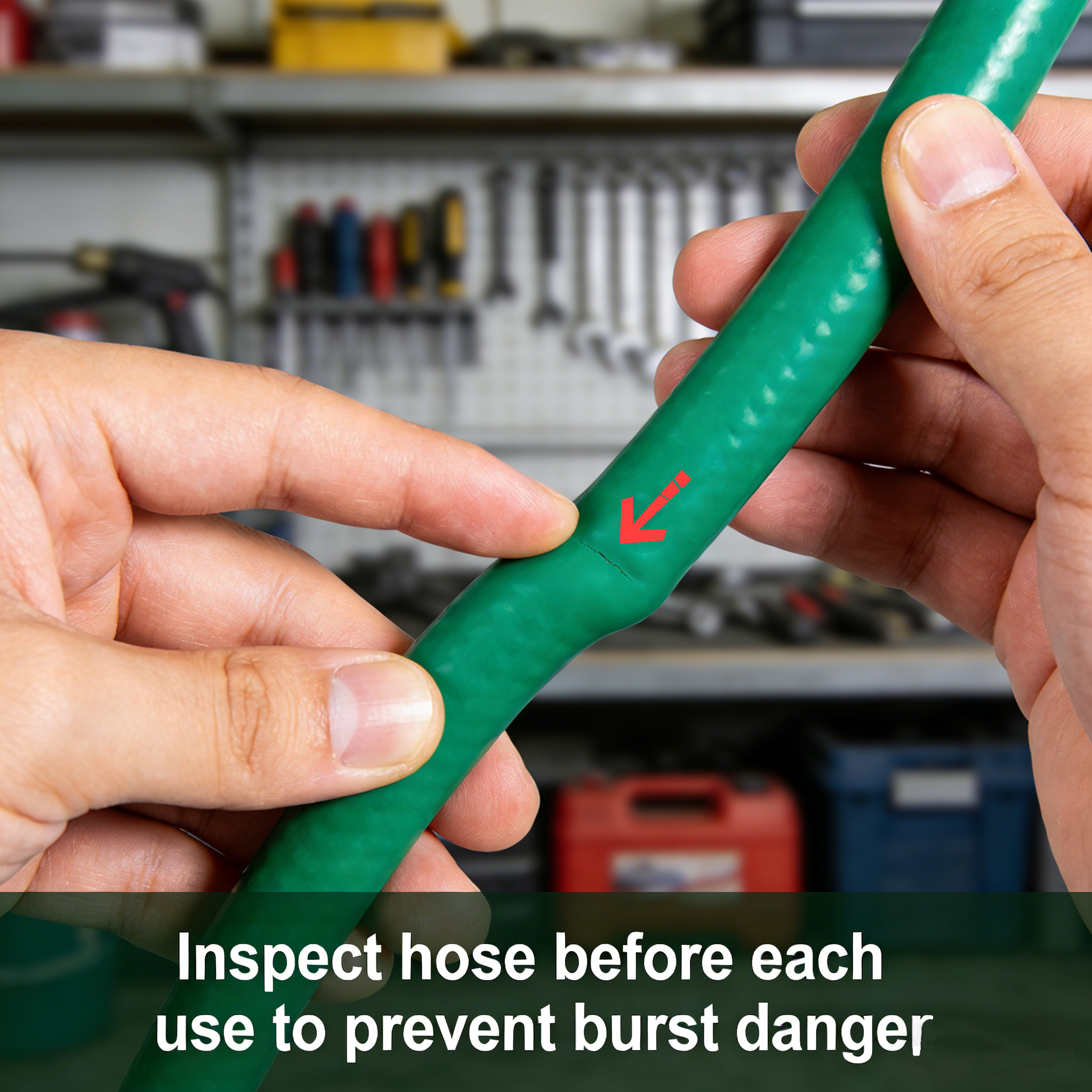
High-pressure hoses operate under extreme stress. A worn or damaged hose can burst without warning, causing injury, property damage, and costly downtime . Leaking connections waste pressure and reduce cleaning effectiveness. Damaged O-rings allow water to escape and air to enter, leading to pressure fluctuations .The Solution:
Visual inspection
- Check the entire length of the high-pressure hose for cuts, bulges, or abrasion
- Inspect fittings for cracks or corrosion
- Look for signs of leakage at connection points
Check O-rings and seals
- Examine O-rings on hoses, guns, and lances
- Replace any that are cracked, flattened, or missing
- Lubricate O-rings with non-water-soluble grease (petroleum jelly works)
Test connections
- Ensure all connections are tight before starting
- Listen for air leaks when running
Customer Tip:
"A burst hose isn't just inconvenient—it's dangerous. A 30-second visual check before each use can prevent a serious accident."
Bonus Maintenance Guide: Quick Reference Checklist
Share this simple checklist with your customers. They can print it and keep it with their pressure washer for easy reference.
Before Each Use
- Check oil level (gas models)
- Inspect water inlet screen—clean if needed
- Examine high-pressure hose for damage
- Check spray gun and wand for leaks
- Verify nozzle is clean and properly installed
After Each Use
- Flush detergent system with clean water
- Disconnect water supply
- Release pressure by triggering gun
- Wipe machine clean
- Store in clean, dry area
Monthly (for frequent users)
- Clean air filter
- Inspect and lubricate O-rings
- Check all fittings for tightness
- Examine nozzles for wear
Seasonal/Every 50 Hours
- Change engine oil (gas models)
- Replace spark plug
- Clean or replace air filter
- Inspect pump oil level (if applicable)
- Winterize before freezing temperatures
Annually
- Full inspection of all components
- Replace high-pressure hose if showing wear
- Service or replace nozzles
- Check entire system for leaks
Conclusion: Maintenance Pays
A pressure washer that's properly maintained doesn't just last longer—it performs better, operates more safely, and retains higher resale value. For your customers, following these five golden rules means fewer breakdowns, lower operating costs, and more years of reliable service.
The bottom line: A little preventive care goes a long way. Share this guide with every customer, and help them protect their investment.
Post time: Mar-14-2026