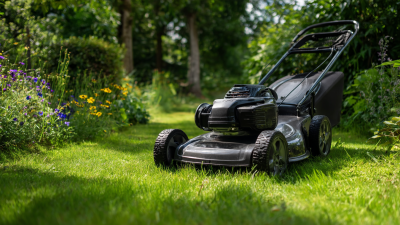
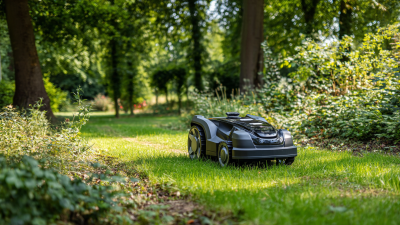
You know, as gardening tech keeps improving, more folks are starting to pick up Robot Lawn Mowers. Honestly, the global market for these smart machines is expected to hit around $1.3 billion by 2026 — pretty impressive, right? This just goes to show how much people are really starting to trust robotic tech for lawn care. But here’s the thing: a lot of people get overwhelmed trying to figure out which features actually matter for their gardens.
Dr. Alice Greene, who’s pretty much an expert in robotics at the International Robotics Institute, mentions, “When picking a mower, folks should focus on functionality and safety, but also keep their garden size in mind.” That’s a solid point because not every robot mower fits every yard. Things like adjustable cutting heights, smart connectivity, and rain sensors are super handy, but surprisingly, many forget to think about battery life and how much maintenance the machine needs — and those really can make or break performance.
Figuring out your way through all these options can be kinda tricky since technology is changing so fast. There are so many choices out there, but really, it’s about understanding what your specific yard needs and what the mower can do. Making an informed decision will totally pay off in the end — your lawn will thank you! Finding the perfect Robot Lawn Mower isn’t necessarily a walk in the park, but with a little planning and research, you’ll get there.
As we approach 2026, robot lawn mowers are evolving rapidly, offering new features tailored for global buyers. When selecting a robot lawn mower, consider navigation capabilities. Look for models equipped with advanced GPS and obstacle detection. This technology helps the mower navigate complex landscapes efficiently. Reliable navigation reduces the chances of collisions and ensures thorough coverage of your lawn.
Battery life is crucial as well. A longer battery life means less frequent charging and more mowing time. Opt for models that can handle larger lawns on a single charge. In 2026, many mowers will feature quick-charging abilities, allowing you to maximize usage.
Tip: When evaluating battery life, consider your lawn size. If your lawn is large, search for models with batteries that last longer than two hours. Additionally, assess the mower’s cutting efficiency. Sharp blades that adjust height automatically can give your lawn a clean cut.
Another important aspect is smart connectivity. Integration with smart home systems is becoming more common. Check if the mower can be controlled via smartphone apps. Features like scheduling and remote control enhance convenience.
Tip: Explore the user interface of the app. Ensure it’s intuitive and provides useful data, such as mowing history and maintenance reminders. Engaging with these features can improve your mowing experience.
The evolution of robotic lawn mowers is shaped significantly by key technologies. One standout feature is the integration of GPS and mapping systems. According to a recent market report, over 60% of consumers prioritize accurate area mapping in their purchasing decisions. This technology not only allows the mowers to navigate efficiently but also ensures they cover every inch of a lawn without overlaps, minimizing energy waste.
Another critical advancement lies in artificial intelligence (AI) applications. AI enables mowers to learn from their environment and adapt to varying conditions. This adaptability leads to better performance on uneven terrains. Reports suggest that AI-driven mowers can achieve up to a 30% increase in efficiency compared to their non-AI counterparts. However, the reliance on AI can make troubleshooting complex when malfunctions occur. Users may find understanding these smart systems a challenge, leading to potential frustrations.
Battery technology is also advancing rapidly. Lithium-ion batteries are now common, offering longer runtimes and quicker charge times. A 2023 study revealed that mowers equipped with these batteries could operate up to 4 hours on a single charge. While this improvement boosts operational capabilities, it raises concerns about battery longevity and environmental impact. Users must consider how often they will need battery replacements over time.
| Feature | Description | Key Technology | Performance Improvement |
|---|---|---|---|
| Autonomous Navigation | Uses sensors and mapping software to navigate lawns without human intervention. | SLAM (Simultaneous Localization and Mapping) | Increased efficiency and reduced operational time. |
| Weather Resistance | Designed to operate in various weather conditions, including rain. | IP Ratings and Advanced Material Coatings | Ensures longer operational life and versatile usage. |
| Smart App Integration | Allows users to control and schedule mowing via smartphone applications. | IoT Connectivity | Enhanced user convenience and control over lawn maintenance. |
| Ultra-Quiet Operation | Designed to operate at low noise levels, allowing for use at any hour. | Brushless Motors and Noise-Reducing Designs | Improved user experience and neighborhood friendliness. |
| Obstacle Detection | Equipped with sensors to detect and avoid obstacles effectively. | Lidar and Ultrasonic Sensors | Minimizes damage to both the mower and surrounding objects. |
In 2026, the demand for robot lawn mowers continues to rise globally. Consumers are looking for features that enhance efficiency and ease of use. Key brands have made significant strides in technology, offering models equipped with advanced navigation systems and automated scheduling options. These innovations allow for seamless lawn maintenance, adapting to various terrains with minimal intervention.
When selecting a robot lawn mower, consider your yard's size and complexity. A model that performs well on a flat, small lawn may struggle in larger, uneven areas. Look for options that fit your specific landscape. Some users share experiences of mowers getting stuck or missing patches. Reflecting on these challenges can lead to better purchases.
Additionally, battery life plays a vital role. Higher-capacity batteries can handle more extensive tasks, reducing the need for frequent recharging. Buyers should check how long models operate on a single charge. Listening to customer reviews can offer insights into performance expectations. If your mower doesn't perform as promised, think about how the design could be improved. Understanding these dynamics leads to informed decisions in a competitive market.
As robot lawn mowers gain popularity, environmental considerations become essential. Sustainable design minimizes waste. Many models now use recyclable materials and energy-efficient components. This innovation reduces the carbon footprint significantly.
Noise pollution is another concern. Many eco-friendly models operate quietly, lessening disturbances to wildlife and neighborhoods. However, some users still find certain units overly loud. It's essential to choose wisely based on user reviews and environmental impact assessments.
Battery technology has advanced, with many mowers using Lithium-ion batteries. They offer longer life and faster charging. Yet, the extraction of materials for these batteries raises ethical questions. Balancing efficiency and environmental responsibility is vital as design evolves. Consumers must remain informed about the environmental impacts of their choices.
This chart displays the percentage of various features that consumers prioritize when choosing eco-friendly robot lawn mowers in 2026. The data reflects a growing concern for environmental sustainability in lawn care technology.
When considering the latest advancements in robotic lawn mowers, user-friendly features stand out as essential for both operation and maintenance. Design simplicity is key; intuitive controls allow users to quickly navigate options. Touchscreen interfaces can make programming a breeze. Moreover, built-in tutorials can guide novice users through setup and maintenance processes.
Automatic scheduling is another impressive feature. Users can set mowing times, ensuring their lawn is well-maintained without constant supervision. However, not all users find this intuitive. Some may struggle with the initial configuration, illustrating the importance of clear instructions.
Battery longevity and easy access to components for cleaning and repairs are crucial as well. Maintenance should not feel burdensome. Many models now include easily removable batteries, which can simplify charging. However, if these batteries fail, users might face complications. The balance between user-friendliness and functional reliability remains a challenge for manufacturers. A deeper understanding of customer feedback can lead to improvements in these areas.
As innovation drives the robot lawn mower industry, 2026 promises exciting new cutting systems. These advanced features prioritize efficiency and precision, catering to gardeners' diverse needs. Enhanced algorithms will allow mowers to navigate complex landscapes. This means better coverage and fewer missed spots.
Innovative cutting systems are making robot mowers more adaptable. Many will feature mulching capabilities, returning clippings to the soil as natural fertilizer. Some models will integrate with weather stations to adjust cutting schedules. This ensures your lawn gets the attention it needs, regardless of the conditions.
**Tip:** When selecting a robot mower, consider terrain type. Slopes or uneven ground may require specific models. Researching features can help you find the best fit. Not every robot mower excels in all conditions, so understanding your lawn’s needs is crucial.
The future of robotic lawn care looks promising, with advancements reshaping the industry. In 2026, we can expect enhanced automation and AI integration in lawn mowers. These machines are becoming smarter, learning the layout of your yard over time. Imagine a mower that remembers where the flower beds are and avoids them automatically. Such technology could reduce the risk of damage, ensuring your garden stays intact.
Design improvements are also on the horizon. Sleek, compact models will be more common. They will fit into tight spaces and navigate obstacles with ease. Battery life remains a concern. However, newer models are being designed for longer runtime and faster recharging. Some may even feature solar panels for sustainable energy.
Despite these innovations, challenges remain. Creating mowers that work effectively in various terrains is crucial. Not all environments suit robotic lawn care. There is ongoing research to address this issue. Similarly, costs may be high initially, limiting accessibility for some consumers. The evolution of this technology is exciting, yet it requires thoughtful consideration of design and usability.
When it comes to maintaining steep slopes, efficiency and safety are of utmost importance. The remote control mower is designed specifically to tackle challenging terrains, offering users a reliable solution for their mowing needs. Weighing approximately 240 kg, this robust machine is built to provide stability and control even on inclines, ensuring that users can confidently operate it from a distance without compromising their safety.
The mower features an impressive cutting width of 28 inches (685 mm), allowing for a wide swath that effectively reduces mowing time. With adjustable blade height settings ranging from 30 to 130 mm, users can customize their mowing experience to suit different grass types and desired finishes. Powered by a durable Loncin 452 cc engine, the mower delivers a rated power of 12.5 HP (9.32 KW), enabling it to handle tough vegetation effortlessly, ensuring both efficiency and a neat, professional appearance in the landscape.
Equipped with a versatile charger that accepts input voltages from AC110 to 220V, this remote control mower is designed for convenience, allowing it to be used in various settings and conditions. By leveraging advanced remote control technology, operators can maneuver the mower with precision, maximizing productivity while minimizing physical strain and risk associated with steep slope maintenance.
: Think about your yard's size and complexity. Some models struggle with uneven terrain.
Battery life is essential. Higher-capacity batteries require less frequent charging and handle larger tasks.
Intuitive controls and touchscreen interfaces simplify operation. Built-in tutorials help new users with setup.
Many users find scheduling useful, but some struggle with initial setup. Clear instructions are important.
They improve efficiency and coverage, adapting to different landscapes to minimize missed spots.
Some models feature mulching capabilities, which return clippings as natural fertilizer.
Users report issues like getting stuck or missing patches. Reflecting on these can improve future choices.
Look for models with easily removable batteries and accessible components for cleaning and repairs.
Consider customer reviews and feedback. Reflect on possible design improvements for better functionality.
Yes, understanding your lawn's needs and researching features can help you find the right model.
The article highlights the essential features that buyers should consider when looking for Robot Lawn Mowers in 2026. It emphasizes the importance of advanced technologies that improve performance, including innovative cutting systems and user-friendly features that simplify operation and maintenance. The comparative analysis of various brands helps potential buyers make informed decisions, while also addressing environmental considerations, such as eco-friendly designs and sustainable practices.
Moreover, the article discusses future trends in robotic lawn care technology, suggesting a shift towards more intelligent systems that enhance efficiency and user experience. By focusing on these key elements, buyers will be better equipped to select the best Robot Lawn Mower that meets their specific needs while promoting sustainability and convenience in lawn care.