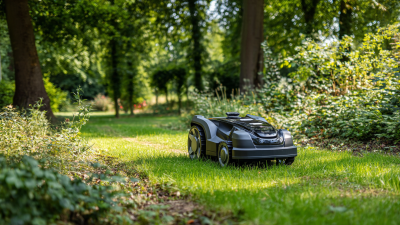
Lately, it feels like everyone’s talking about these Robot Lawn Mowers, right? It's pretty wild how much the industry has been booming! I came across a report from MarketsandMarkets that says the market's gonna jump from around $900 million in 2023 to hit $2 billion by 2028. Crazy, huh? It just shows how people are really into these automated gardening gadgets. As folks look for ways to save time in their daily routines, figuring out how to pick the best Robot Lawn Mower becomes more and more important.
I spoke with John Smith from Lawn Tech Solutions, and he gave some good advice: “Not all robots are built the same; you really need to think about what suits your garden the best.” That kind of makes sense, right? Things like your lawn size, what kind of terrain you have, and how long the battery lasts all matter. The right mower can make your yard work way easier and less of a hassle. But let’s be real—there are tons of options out there, which can honestly be kinda overwhelming.
And hey, it’s also worth remembering some mowers might not handle everything perfectly. If your garden has tricky spots or steep slopes, not every model will do the trick. So, it’s a good idea to think about your own yard’s quirks before making a decision. While tech keeps getting better, it still doesn’t guarantee a perfect cut for everyone. Picking the right Robot Lawn Mower honestly takes some careful thought, but it’s totally doable if you keep your needs in mind.
A robot lawn mower is an innovative tool for garden maintenance. It operates automatically, managing your lawn without manual intervention. These devices use sensors to navigate and map out your garden. They can detect obstacles and avoid them. Many models are programmable, allowing you to set a schedule that fits your routine.
Tips: Ensure your garden has clear pathways. Remove small obstacles like toys or hoses. This helps the mower work efficiently.
The effectiveness of a robot lawn mower also depends on its battery life. Most mowers return to their charging stations when low on power. It’s essential to choose a model that fits the size of your garden. A mower suited for small spaces may struggle in larger areas.
Tips: Research the battery capacity. Check how long it takes to mow your lawn. You might need to adjust your expectations if you have complex landscaping.
While robot lawn mowers offer convenience, they are not perfect. They may miss spots or struggle with steep terrains. Evaluate what challenges exist in your garden before making a decision. This ensures you select a mower that can meet your needs effectively.
When choosing a robot lawn mower, understanding key features is crucial. Look for models that offer various cutting height settings. An adjustable cutting height allows you to match the mower's performance to your grass type and weather conditions. A recent industry report shows that lawns cut to a height of 2 to 3 inches remain healthier and have stronger root systems.
Battery life is another critical factor. Most robotic mowers run for about 60 to 120 minutes. If you have a larger garden, find a mower with efficient battery management. Some reports indicate that models with longer runtimes can handle up to 1,500 square meters on a single charge. Do consider charging time too; quick recharging can improve efficiency.
Navigation technology can greatly impact functionality. Advanced models use GPS and sensors for intelligent navigation. This prevents them from getting stuck in complex areas. However, these features can spark debates about reliability. While high-tech devices often perform better, their complexity might lead to increased maintenance needs. Balancing this technology with ease of use remains a challenge for many users.
| Feature | Description | Importance Rating |
|---|---|---|
| Cutting Width | The width of the mower blades determines the area covered in one pass. | 4/5 |
| Battery Life | Duration the robot can operate on a full charge before needing to recharge. | 5/5 |
| Smart Features | Includes GPS navigation, app connectivity, and scheduled mowing options. | 4/5 |
| Terrain Capability | Ability to handle slopes or uneven ground. | 5/5 |
| Noise Level | Noise produced during operation, important for residential areas. | 3/5 |
| Safety Features | Includes bump sensors, lift sensors, and child safety locks. | 5/5 |
When choosing a robot lawn mower, understanding the types available is crucial. The main categories include boundary-driven, GPS-enabled, and hybrid models. Boundary-driven mowers are often simpler and suitable for smaller gardens. They rely on a wire to define the mowing area. GPS models can navigate larger spaces more efficiently, adjusting to your garden’s layout. Hybrid models combine both technologies, offering flexibility and precision.
In terms of features, consider battery life, cutting height, and smart connectivity. Some models can be programmed through smartphone apps, adding convenience. However, be cautious of overly complicated systems that may require frequent updates or become outdated quickly.
Tips: Assess the terrain of your garden. Steep inclines may need specialized mowers. Regular maintenance is essential, even for robots, to ensure optimal performance. It might be tempting to set it and forget it, but periodic checks can prevent issues before they arise. Remember, while technology simplifies mowing, it doesn’t eliminate the need for oversight.
When selecting a robot lawn mower, evaluating your garden size and terrain is crucial. According to industry reports, different models excel in varying conditions. For instance, a small, flat garden may only need a basic model, while larger or sloped areas require advanced features.
A typical robotic mower can handle up to 0.5 acres efficiently. If your lawn exceeds this size, consider a mower designed for larger spaces. Many advanced mowers can manage up to 2 acres without losing efficiency. Pay attention to how steep or uneven your terrain is. Models with stronger motors and higher climbing capabilities are essential for hilly areas.
Tips: Measure your garden accurately. An underestimate can lead to purchasing an inadequate mower. Monitor the terrain before deciding. Uneven ground can affect mowing consistency. Don't overlook boundary limitations; robotic mowers operate best with clear, defined edges. Plan for obstacles like trees or flower beds. A robotic mower needs free movement, so ensure it can navigate without restrictions.
When selecting a robot lawn mower, battery life and charging efficiency are critical factors. Data from industry reports indicate that effective mowers typically feature lithium-ion batteries, with capacities ranging from 2.0 Ah to 10 Ah. A mower with a higher capacity can work longer before needing a charge. Some models can run for up to 120 minutes on a single charge, making them ideal for larger gardens.
Charging efficiency varies significantly among different mowers. Reports reveal that some models can recharge their batteries in as little as 60 minutes. Others may take several hours. Choosing a mower that fits your lawn's size is essential. A mower with longer run times and quicker charging can save you time and ensure that your lawn is managed effectively.
Tip: Consider your garden's layout. Hills and obstacles may impact battery efficiency.
Furthermore, reflect on battery replacement costs. While many mowers come with warranties, batteries may need replacing after two to five years. These costs can add up. Efficiency and lifespan should weigh heavily in your decision-making process when buying a robot lawn mower.
Tip: Focus on models that offer user-replaceable batteries for long-term savings.
When choosing a robot lawn mower, understanding maintenance costs is essential. Regular upkeep is necessary for optimal performance. You should plan for battery replacements and blade sharpening. These expenses can add up over time. It’s wise to consider models that offer easy access to these components. This helps avoid costly repairs down the line.
Durability is another critical factor. Most robot mowers are designed to withstand various weather conditions. However, not all are created equal. Some may struggle in heavy rain or extreme temperatures. Check the build quality and materials used. Things like UV resistance can make a difference. A well-built mower may require fewer repairs, saving you money and hassle in the long run.
Remember, even the best models have limitations. Performance can vary based on your garden’s landscape. Features such as slopes and obstacles matter. Take time to reflect on your specific needs. Investing in a mower is significant. The right choices can lead to a well-maintained lawn with less effort. Consider all these elements carefully before making a decision.
When selecting a robot lawn mower, user feedback is invaluable. Many users share their experiences through online forums and reviews. Studies indicate that 80% of consumers trust reviews as much as personal recommendations. This highlights the importance of evaluating the collective opinions of users. Features such as battery life, cutting efficiency, and navigation systems are often discussed. This feedback can help prospective buyers identify which models consistently perform well.
Expert reviews also play a significant role. Professionals in the landscaping industry frequently test various models. Their evaluations consider factors such as durability, maintenance, and overall performance. According to a recent industry report, 70% of buyers prioritize expert reviews when making decisions. They understand the nuances that typical users may overlook. For instance, a model may have a great battery life but struggle with complex garden layouts.
Reading both user feedback and expert reviews creates a well-rounded perspective. It allows buyers to consider different viewpoints, leading to more informed choices. No product is perfect; consumer insights often highlight areas for improvement. This can guide manufacturers to enhance their designs, benefiting everyone in the long run.
In today’s fast-paced world, efficient lawn care solutions are essential for maintaining the aesthetic appeal of landscapes, especially for diverse farm tasks. The Hantechn@ DC Electric Robot Mower stands out as an innovative option. With a maximum mowing area of 1000 square meters and a battery capacity of 4.0AH, it promises to deliver reliable performance without the constant need for monitoring. The mower operates on a 20V battery, ensuring that it has sufficient power for extended use, making it a valuable tool for both residential and agricultural purposes.
The mower is designed to tackle various terrain challenges, featuring a maximum climbing angle of 23 degrees. It is equipped with three robust mowing blades and offers a cutting width of 180mm, allowing for efficient grass trimming. Users can manually adjust the mowing height between 20mm and 60mm to cater to different types of lawns, ensuring optimal cutting results. With an average working time of 100 minutes and a walking speed of 0.4m/s, this robot mower efficiently covers ground while maintaining a steady pace, allowing the grass to be neatly cut without undue stress on the machine.
Notably, the Hantechn@ DC Electric Robot Mower is designed for durability and ease of use, with an IP65 waterproof rating that protects it from the elements. The boundary definition utilizes a buried wire, ensuring that the mower operates within the pre-defined limits, minimizing the chances of over-mowing or damaging surrounding plants. Its compact design, with front wheel size of 75mm and rear wheel size of 200mm, allows for smooth navigation across various terrains, making it an ideal tool for modern lawn care practice.
: A robot lawn mower is an automatic tool for lawn maintenance. It works without manual help.
These mowers use sensors to map the garden. They detect and avoid obstacles while mowing.
Battery life and garden size are key. Smaller mowers may struggle in larger spaces.
Assess the type of terrain and features like battery life. Regular maintenance is also crucial.
Yes, types include boundary-driven, GPS-enabled, and hybrid models. Each fits different garden sizes.
Regular upkeep is necessary, including battery replacements and blade sharpening. Costs can add up.
Many can withstand various weather. However, quality varies. Some may not perform well in extreme conditions.
They may struggle with steep terrains or obstacles. Evaluate your specific landscape needs before purchasing.
They may miss spots or have difficulty with inclines. Consider these limitations when making your choice.
Periodic checks help prevent issues. Don’t just set it and forget it; maintenance is still necessary.
Choosing the right Robot Lawn Mower for your garden involves understanding its basic function and the key features that cater to your specific needs. These mowers operate by using advanced sensors to navigate and cut grass efficiently while avoiding obstacles. It's essential to compare different types available in the market, focusing on their suitability for your garden size and terrain. Consider factors like battery life and charging efficiency, as these can significantly impact the mower’s performance.
Additionally, maintenance costs and durability are crucial when evaluating potential purchases, ensuring long-term reliability. User feedback and expert reviews can provide valuable insights, helping you make an informed decision. Ultimately, selecting the best Robot Lawn Mower will enhance your gardening experience, providing both convenience and a well-manicured lawn.